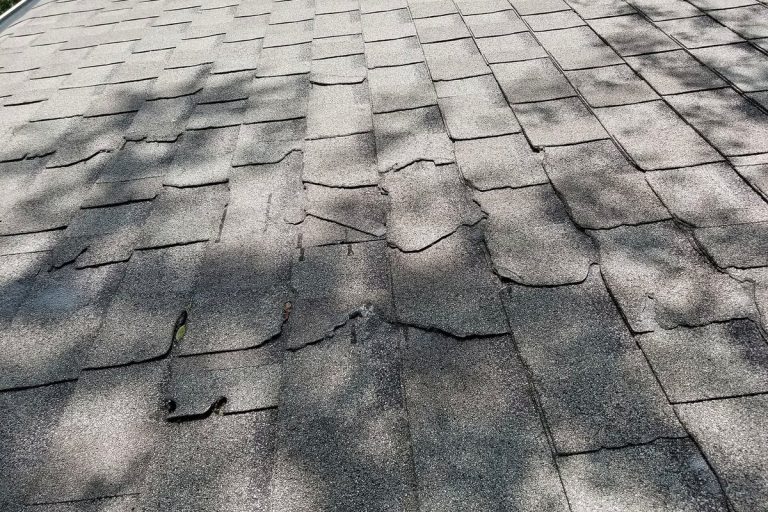
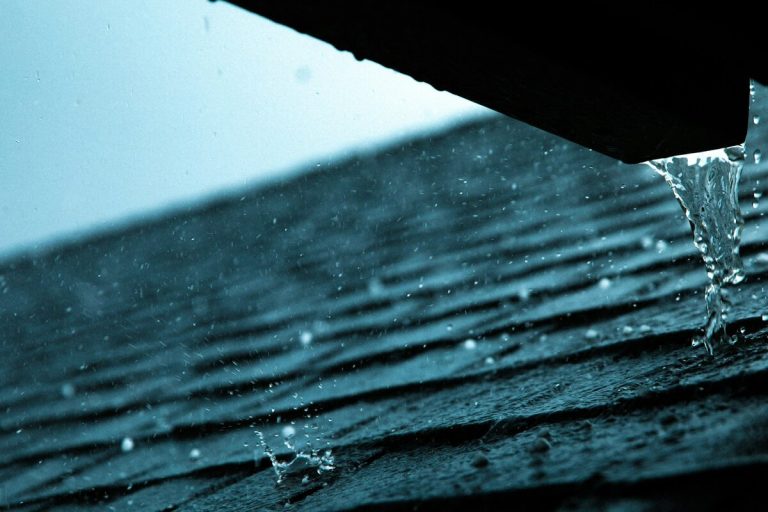
Monsoon Season Is Over. Now Check the Roof.
Short answer: A post monsoon roof inspection means checking your roof once the summer storms have passed for the damage wind, rain, and debris leave behind: cracked or displaced tiles, debris blocking scuppers and gutters, blisters or cracks in foam and coatings, loose flashing around AC units and vents, and new stains on interior ceilings. Most of it can be checked from the ground or a ladder. Anything you find, or cannot see, is worth having a roofer confirm before the winter rains.
Arizona’s monsoon runs through the summer and winds down in September. By October, the Valley has had its share of dust storms, microbursts, and hard downpours, and roofs in Scottsdale and Phoenix take all of that after months of heat have already stressed every seam and sealant on them.
Fall is the right time to look. The weather is comfortable enough to do it, and the next real rain is usually a couple of months away, which leaves time to fix what the storms broke. Here is a practical checklist. If you find storm damage, or suspect it, our storm damage roof repair page explains what we do about it.
Before you start: stay off the roof
Everything on this list can be checked from the ground, a ladder at the eave, an upstairs window, or inside the house. Please do not walk a tile roof. Tile cracks underfoot, and you can create the damage you were looking for. Foam roofs are slippery when wet and easy to puncture with a heel. If something needs a closer look, that is what the inspection is for.
The post-monsoon roof checklist
1. Walk the yard and the perimeter
Start on the ground. Look for pieces of tile, chunks of foam, strips of coating, or shingle granules in the yard, the pool, or the gutters. Check for branches on the roof, and look at the fascia and roof edges for anything lifted or pulled away. Debris on the ground is the first clue that something above it is missing.
2. Look at the tile from the ground
From the street and the back yard, scan each slope for tiles that are cracked, slipped out of line, or missing. Wind-driven debris and hail crack tiles, and strong gusts can lift a tile and set it back down out of place. Pay attention to the ridge and hip lines, the edges, and the spots around vents and chimneys. A displaced tile leaves the underlayment exposed, and the underlayment is what actually keeps a tile roof dry.
3. Check scuppers, drains, gutters, and downspouts
Monsoon wind moves a lot of material onto roofs: palm fronds, mesquite and palo verde litter, dust, and whatever the neighbor’s tree let go of. On a flat roof it ends up at the scuppers and drains. On a pitched roof it ends up in the gutters and valleys. A blocked scupper means the next rain ponds on the roof instead of leaving it. From a ladder, look at each scupper opening and gutter run for anything that would stop water from flowing, and clear it if you can reach it safely. Make sure every downspout is still attached and draining away from the foundation.
4. Look for blisters, cracks, and bare spots in foam and coatings
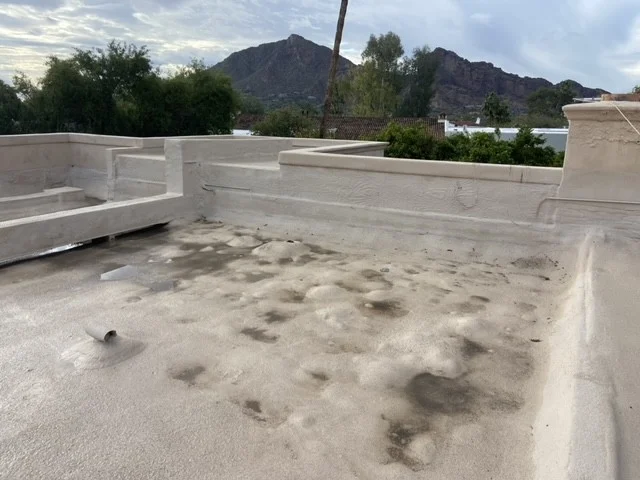
If you have a foam or coated flat roof, look across it from a ladder or an upstairs window. Watch for blisters (raised bubbles in the coating or foam), cracks or splits in the coating, areas worn through to bare foam, and gouges from debris that hit the roof during a storm. Dark rings or silt lines show where water sat after the last rain.
5. Check the flashing around AC units, vents, and skylights
The places where something comes through the roof are where most leaks start. Rooftop AC units, plumbing vents, exhaust fans, and skylights all rely on flashing and sealant that take a beating from heat and then get worked loose by wind. Look for flashing that is lifted, bent, or separated, sealant that has cracked or pulled away, and rust streaks running down from a penetration. Also think back to any AC service over the summer. Technicians walk on roofs, and a dropped tool can puncture a coating.
6. Inspect the parapet walls and roof edges
On flat roofs, the parapet is the low wall around the edge. Look at the stucco for new cracks and at the cap along the top for anything loose. Water that gets behind a parapet travels a long way before it shows up inside.
7. Go inside and look up
Walk every room and look at the ceilings and the tops of the walls, especially under valleys, around skylights, and below where the AC sits. Look for new stains, stains that have grown, bubbling paint, or a musty smell in one room. Check the attic if you have access for daylight through the deck, damp insulation, or water marks on the framing. Interior signs often lag the damage by a storm or two, so a stain that appeared in September may trace back to a July storm. Our post on hidden roof leak signs goes deeper on what to look for inside.
8. Write down what you find
Take dated photos from the ground of anything that looks off. If you end up filing an insurance claim, those photos establish when the damage appeared. If not, they still give the roofer a head start.
What to do with what you found
Minor debris in a gutter you can reach is a homeowner job. Almost everything else on this list is worth a professional look, even if it seems small. A lifted piece of flashing is a reseal now and a ceiling stain in December.
If you found water coming in during rain, or a section of roof that is clearly open to the weather, that is worth a call right away rather than waiting for a scheduled inspection. Our emergency roof repair page covers how we handle those. If the damage is to tile, our tile roof repair page explains why the underlayment is usually the real issue.
Why a fall inspection pays off in the Valley
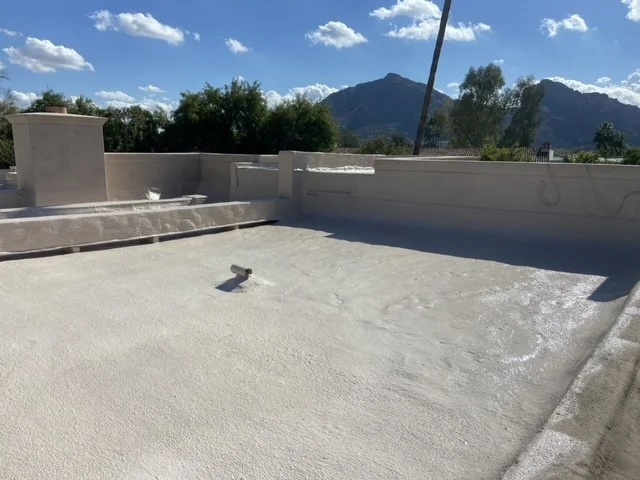
Arizona roofs live through two kinds of stress: months of heat and UV that dry out sealants and coatings, then a short, intense storm season that tests everything the heat loosened. The damage happens in summer. The leak often shows up in winter, when the first long, soaking rain finds the crack a quick monsoon cell ran off too fast to find. An October inspection catches that damage in between, while it is still a repair.
“I woke up to the ceiling leaking right on top of me in our first monsoon of the season. I was panicked it may rain again before I could get someone out to treat the roof. Circle G showed up the same day to get started.”
Want a roofer to check it for you?
Circle G Roofing inspects tile, foam, and flat roofs across Scottsdale, Phoenix, and Maricopa County. We photograph what we find and tell you plainly what needs attention and what can wait. We are family-run and handle emergency leaks 24/7.
Call Circle G Roofing at (602) 791-6415 or request an inspection online.
Frequently Asked Questions
When should I inspect my roof after monsoon season in Arizona?
What does monsoon damage look like on a tile roof?
Can I inspect my own roof after a storm?
Should I file an insurance claim for monsoon roof damage?
Talk to Circle G Roofing
Family-run roofers serving Scottsdale, Paradise Valley, Cave Creek, Carefree and the Phoenix area.