

- Silicone Roof Coating · Scottsdale, AZ
Silicone Roof Coating Services in Scottsdale, AZ
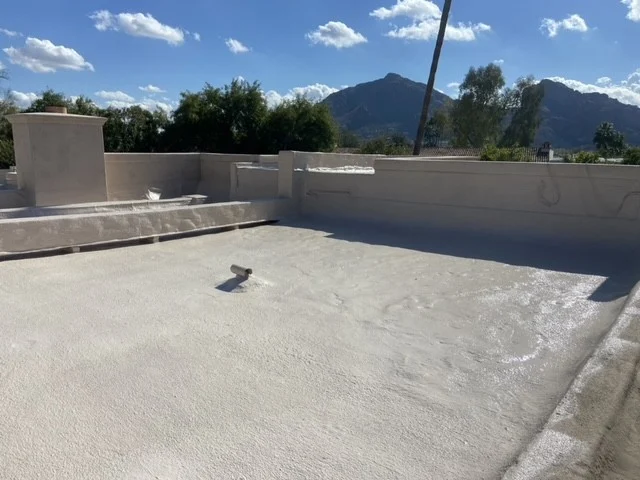
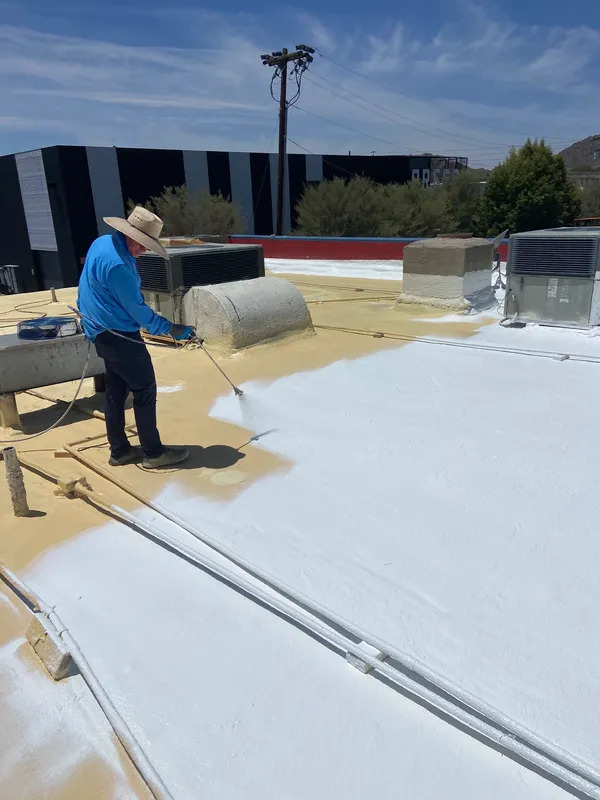

Free Silicone Coating Quote
We inspect the roof, test for moisture and price it in writing.
Why silicone is the go to coating for Scottsdale flat roofs
Three things decide how long a flat roof coating lasts in the desert, and silicone handles all three better than the alternatives.
- Seamless · ponding tolerant · reflective
Ponding water
Silicone does not soften or break down where water sits after a monsoon storm, which is where acrylic coatings fail first.
Constant UV
It holds up to years of Arizona sun without chalking away, so the membrane stays thick where it matters.
Heat swings
It stays flexible through hot afternoons and cooler nights, so it moves with the roof instead of cracking.

What a silicone coating job includes
Silicone only bonds to a clean, dry, sound roof, so most of the work happens before it comes out of the drum. We wash, dry, repair and detail the roof, then spray the silicone to the thickness its warranty requires.
- Silicone specs
Silicone roof coating specs that matter
Two silicone quotes can look alike and perform very differently. These are the numbers to compare, and every one of them is written into our quote.
High solids silicone
High solids silicone loses little to evaporation, so what is sprayed is close to what stays on the roof. Low solids products shrink as they cure.
Dry film thickness
Thickness is what buys years. We gauge the wet film as we spray so the dry coat meets the warranty spec.
Solar reflectance
A fresh white silicone typically reflects around 85 percent of sunlight, falling as dust settles, which a rinse restores.
Cure time
It skins over in hours and fully cures over the following days, faster in dry Arizona air than in humid climates.
Typical figures for high solids silicone roof systems. The product line, its solids content and the dry mil thickness for your roof are named in your quote.
- Silicone vs. the others
Silicone vs. polyurea vs. acrylic, at a glance
Silicone is not the only elastomeric coating we spray. This is where it beats the other two on a flat Arizona roof, and where it does not.
| Silicone | Polyurea | Acrylic | |
|---|---|---|---|
| Ponding tolerance | Excellent, its main strength | Good | Poor; softens under water |
| Lifespan | 10 to 15 years per coat | 20+ years when maintained | Shortest |
| Relative cost | $$ | $$$ | $ |
| Best use | Flat roofs that hold water | Busy roofs with foot traffic | Sloped roofs that drain fast |
For the full picture across every coating we apply, see the roof coatings hub.

- Where it works
Which roofs can take a silicone coating
Silicone goes over most flat and low slope roofs in the Valley, with a primer where the surface calls for one. It is especially good over spray foam and metal, where seams and fasteners are the usual leak points.
It is not the answer everywhere. Steep shingle roofs, roofs that are wet underneath and roofs with a deck that is failing need a different fix first, and we will tell you that on the inspection.
- Honest downsides
When silicone is not the right choice
Silicone is our usual pick for flat roofs that pond, but it has real trade offs, and a contractor who never mentions them is selling, not advising. These are the silicone roof coating problems worth knowing before you choose it.
If any of them matter more on your roof than ponding water, we will point you to polyurea or acrylic instead.
It picks up dirt
The surface holds dust after a haboob, which dulls the white and cuts reflectivity until it is rinsed.
Slippery when wet
Not ideal on roofs walked often in the rain, unless walk paths get granules.
Only silicone sticks to it
Every future recoat has to be silicone, or the old coat has to be stripped first.
Heavy foot traffic around equipment? That is where polyurea earns its higher price.
- Recoat now or later?
When a silicone roof needs attention, and when it can wait
Silicone wears slowly and evenly, which makes problems easy to spot once you know what to look for.
- Book soon
Have it looked at now
Each of these lets water past the coating.
- Can wait
Fine for another season
Note it for your next inspection.
How we apply a silicone roof coating
Four stages, the same on a patio cover as on a warehouse. The price, the thickness and the warranty are in writing before the first one starts.
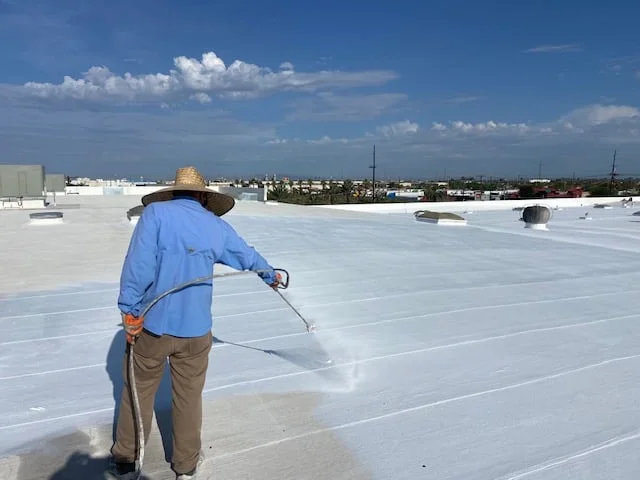
Clean the roof
Power washing takes off dust, chalk and grime, then the roof dries out fully, because silicone will not grip a damp surface.
Repair the base
Wet foam, rusted panels, loose fasteners and split seams are fixed with matching material before any coating goes on.
Prime and detail
A primer goes on where the surface needs one, and seams, drains and penetrations get a reinforced detail coat.
Spray the silicone
The topcoat is sprayed in one continuous layer and checked with a wet film gauge so it meets the warranty thickness.
- Silicone services
Silicone roof coating services we offer
Homes, patio covers, metal buildings and commercial roofs across Scottsdale, all coated and warrantied by the same family run crew.
Residential flat roofs
Silicone over foam or bitumen on houses, casitas and additions.
Silicone over spray foam
A silicone recoat that renews a foam roof without stripping it.
Metal roof restoration
Fasteners and seams sealed, rust treated, then coated in silicone.
Patio and carport covers
Low slope covers that leak at the house wall, sealed and coated.
Silicone over old silicone
A worn silicone roof cleaned and given a fresh silicone layer that bonds to the last one.
Commercial silicone roofs
Large roofs coated in sections with the building kept open.
- Warranty vs. lifespan
Why a five year warranty on a coating rated for 10 to 15 years?
They answer different questions. The five year warranty is what we put in writing on the silicone and our workmanship, and your quote lists exactly what it covers, along with any manufacturer material warranty on the system we use. The 10 to 15 years is how long a properly applied silicone coat typically lasts on a Scottsdale roof that drains, gets a yearly rinse and has damage patched quickly. The gap is the part maintenance earns.
- Keep it working
Five ways to keep a silicone roof working longer
A silicone roof needs very little, but the little it needs makes a real difference in Scottsdale.
- Rinse it once a year. Silicone holds dust, and a dusty roof reflects less heat. A gentle rinse brings back the bright white surface.
- Keep the drains open. Silicone tolerates ponding, but clear scuppers still stop water and debris from loading the roof.
- Use walkway pads. Silicone is slick when wet. Granulated walk paths to HVAC units and solar panels protect people and the coating.
- Recoat with silicone only. Very little bonds to cured silicone except more silicone, so the next coat has to match.
- Check it after big storms. Hail and wind blown debris can puncture a coating. A quick inspection catches it before water does.
- Silicone or acrylic?
Silicone or acrylic: what is the difference
On roofs that hold water, silicone wins. On a steep, well drained roof on a tight budget, acrylic can be the sensible choice.
Built for flat roofs that pond
It stays intact under standing water, keeps its thickness under constant sun and usually gives the most years for the money. The trade offs: it holds dust, it is slippery when wet, and future coats have to be silicone.
Cheaper, but thirsty for drainage
Acrylic elastomeric costs less up front and is easy to recoat with almost anything. It breaks down where water sits, though, and wears faster in Arizona sun, so it suits sloped, well drained roofs best.
The membrane and the prep work behind it are covered in writing after the job is done.
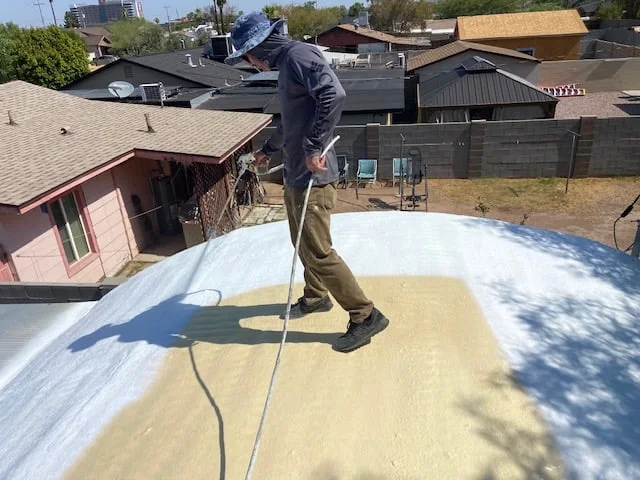
Silicone coatings applied by people who prep properly
Silicone is unforgiving of shortcuts. On a dirty or damp surface it peels, and on a roof with wet foam underneath it seals the problem in. Our crew washes, dries, repairs and primes first, then sprays to a measured thickness, which is why our silicone roofs stay bonded through summer after summer.
- Silicone roofs we coat
From a single patio cover to a commercial roof, each job gets the same prep and the same written warranty.
Outside Scottsdale, we apply silicone roof coatings in Phoenix, Paradise Valley, Fountain Hills, Cave Creek, Carefree, New River, Tempe, Mesa, Chandler, Gilbert, Glendale, Peoria and Sun City. Every town we cover is listed on our service areas page.
Reviewed and recognized


A BBB accredited business, recognized with Angie’s List Super Service Awards in 2013 and 2014.
- Silicone questions
Silicone roof coating questions, answered
The questions Scottsdale homeowners and property managers ask most before choosing silicone.
Not sure silicone is right?
Give us a quick rundown of the roof by phone. We will tell you honestly whether silicone is the right fit or whether something else would serve you better.
Is a silicone roof coating worth it?
On a flat roof that is dry and sound underneath, almost always. You get a new waterproof surface for a fraction of the cost of reroofing, with no tear off and no open deck. It is not worth it over a roof that is already wet inside, because the silicone traps that moisture, so we test for it first.
Does silicone roof coating have drawbacks?
A few, and they are manageable. A silicone roof gets slick in the rain, so we add granules on walkways. It picks up dust, which a yearly rinse takes care of. And once a roof is silicone, the next recoat needs to be silicone as well.
Can silicone go over my existing roof?
Usually. Silicone bonds well to spray foam, metal, modified bitumen, single ply and old silicone, with a primer on metal and weathered bitumen. It will not hide a wet roof, so the foam or deck underneath gets probed for moisture before we quote.
How long does a silicone roof coating last?
On a Scottsdale roof, around 10 to 15 years before it needs another coat, and longer on a roof that drains well and gets rinsed now and then. When it is due, you add a fresh layer of silicone over the old one rather than starting from scratch.
Does a silicone roof coating stop leaks?
Silicone stops the slow leaks that come through a worn surface, open laps and backed out fasteners, and it keeps working under ponding where other coatings let go. Soaked foam or a badly flashed vent still has to be rebuilt first, so the silicone seals a sound roof rather than trapping water.
What does a silicone roof coating cost?
Silicone usually sits between acrylic and polyurea on price. Your number depends on roof size, the mil thickness the system needs, whether metal or bitumen needs a primer and how much repair comes first. We measure and photograph the roof and quote it in writing, free.
Can silicone roof coating be recoated?
Yes, with more silicone. Once the old coat is cleaned, a new layer of silicone bonds to it well, which makes recoating simple. Acrylic and most other coatings will not stick to cured silicone, so the recoat has to match.
Do I need a primer for silicone roof coating?
Sometimes. Clean foam and many single ply roofs take silicone directly, while metal, older bitumen and some weathered coatings need a primer to bond. We run an adhesion test on your roof and put the answer in the quote.
Can I apply silicone roof coating myself?
You can buy it, but a DIY coat rarely lasts. The roof has to be washed, fully dry, repaired and primed where needed, and the silicone has to go on at an even, measured thickness. Roll it on thin over a dusty or damp roof and it peels, and since only silicone sticks to silicone, a failed DIY coat is hard to fix.
How soon after a silicone roof coating can it rain?
Most silicone coatings skin over within a few hours and can take light rain soon after, but they need dry weather while they are going on. We check the forecast and will not spray with a monsoon cell on the way.
Can you walk on a silicone roof?
Yes, carefully. Cured silicone is walkable, but it is slick when wet and softer than polyurea, so sharp tools and dragged equipment can cut it. We add granulated walk paths to HVAC units and anything that gets serviced often.
Silicone or polyurea for a foam roof?
Silicone for most foam roofs, because it handles ponding water and costs less. Polyurea makes sense on a foam roof with heavy foot traffic around equipment. See our polyurea roof coating page for when it is worth the extra.
Can you put silicone roof coating over shingles?
It is not something we recommend. Shingles are made to shed water down a slope, and coating them can trap moisture and void the shingle warranty. Silicone belongs on flat and low slope roofs, which is where we use it.
Put a silicone roof on before the next monsoon
Call (602) 791-6415 or book a free inspection. We test the roof, photograph it and send a written price with the silicone thickness and the five year warranty spelled out.