

- Elastomeric Roof Coatings · Scottsdale, AZ
Elastomeric & Polyurea Roof Coatings in Scottsdale, AZ
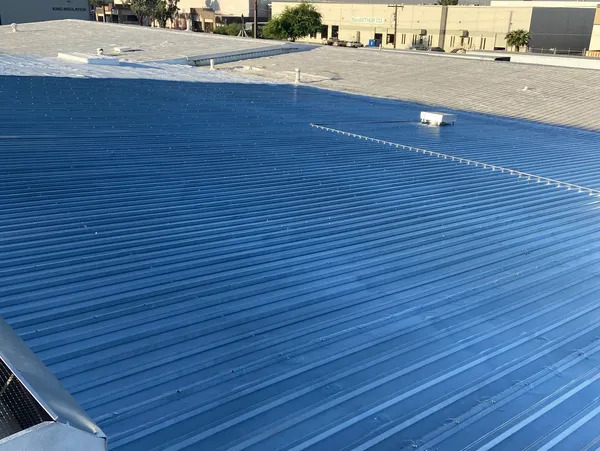

Free Polyurea Assessment
We check whether your roof needs polyurea or something cheaper.
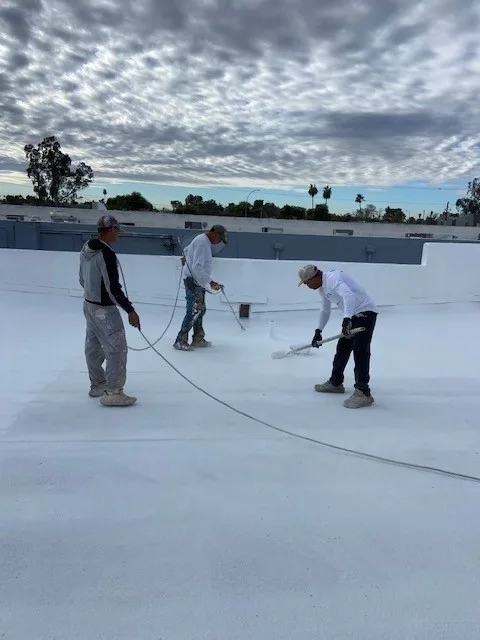
- What elastomeric means
What is an elastomeric roof coating?
An elastomeric roof coating is a liquid applied membrane that cures into a rubber like skin. It stretches as the roof expands in the afternoon sun and shrinks back overnight, so it keeps sealing through Arizona heat cycling where stiff paints and tars crack.
Polyurea, silicone and acrylic are all elastomeric coatings. We recommend polyurea where a roof takes traffic, moves or has to be back in service fast; a silicone roof coating where water ponds; and acrylic where the roof drains well and budget leads. If the real problem is a leak at a seam or flashing, that gets a roof repair first.

- What polyurea is
What makes polyurea different from other roof coatings
Polyurea is two liquids mixed in the spray gun at high heat and pressure. They react on contact and turn into a tough, rubbery membrane almost immediately, so there is no long cure window for dust, wind or a monsoon cell to ruin.
That speed lets it go on thick in one pass and stretch across seams and hairline cracks, which is why it suits roofs that expand, vibrate or get walked on.
- When polyurea wins
Polyurea vs. silicone vs. acrylic: where each one wins
Polyurea is not the answer for every roof. It wins on speed, toughness and movement; the other two win on price or standing water.
| Polyurea | Silicone | Acrylic | |
|---|---|---|---|
| Cure time | Seconds to gel, walkable within hours | Hours, longer in cool weather | Needs warm, dry days to cure |
| Ponding water | Holds up well | The strongest of the three | Avoid on roofs that pond |
| Foot traffic | Built for it | Soft; slippery when wet | Moderate |
| Lifespan | 20+ years with upkeep | 10 to 15 years | The shortest |
| Relative cost | $$$ | $$ | $ |
Polyurea earns its price on working roofs. On a quiet residential roof, we will usually quote one of the other two.
- Is polyurea the right call?
When your roof needs polyurea, and when a cheaper coating will do
Polyurea costs more than silicone or acrylic, so we only recommend it where it pays off. Here is how we decide.
- Polyurea
Polyurea earns its price
Roofs like these get the most from it.
- Cheaper option
Silicone or acrylic will do
We will quote the cheaper system instead.
Polyurea over foam, metal and concrete roofs
Polyurea bonds to most sound roof surfaces, but each one fails in its own way and needs its own prep.
- Prep decides the bond
Foam roofs
Busy foam roofs wear through their coating along service paths. We repair the foam, then spray polyurea as a hard wearing topcoat around equipment and walkways.
Metal roof coating
Metal leaks at fasteners and laps as panels move with the heat. Rust is treated and primed, seams and screws are detailed, then one flexible membrane covers the lot.
Concrete roof coating
Concrete decks crack and let water track through. Cracks are routed and filled, the deck is primed, and the polyurea bridges the hairline movement that follows.
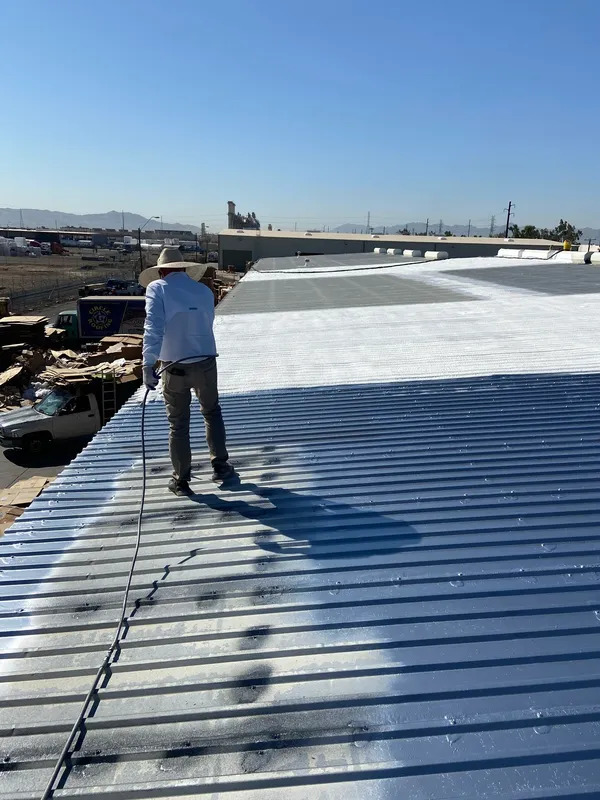
What prep looks like on every surface
Whatever the roof is made of, it is cleaned, dried and repaired first, then primed where the surface needs help to bond. Detail work at seams, curbs and drains comes before the main spray.
How a polyurea roof coating is applied
Polyurea leaves no time to fix mistakes once it leaves the gun, so the work is all in the setup. This is our order of operations.

Clean and dry the surface
The roof is washed and left to dry completely, because a two part membrane will not forgive damp or dust.
Repair and prime
Damaged areas are rebuilt and a primer goes down wherever the substrate needs help to bond.
Detail the weak spots
Seams, scuppers, curbs and penetrations get their own reinforced pass before the main spray.
Spray to thickness
The membrane is sprayed in a continuous pass, thickness checked as we go, and the roof is usable within hours.
- Polyurea services
Polyurea and elastomeric coating services
Fast cure polyurea for working roofs, and acrylic elastomeric for roofs that do not need the extra. Only need silicone or a leak fixed? Those have their own pages.
Commercial roof coatings
Offices, retail and warehouses coated without shutting the building.
Metal roof restoration
Panels, seams and fasteners sealed under one flexible membrane.
Polyurea over spray foam
A tough, traffic ready topcoat for foam roofs with busy equipment.
Concrete roof decks
Cracked concrete decks and parking structures waterproofed in one pass.
Walkways and equipment areas
Extra polyurea built up on service paths and around rooftop units where traffic is heaviest.
Acrylic elastomeric recoats
The lower cost elastomeric option for well drained roofs that see little traffic.
- Warranty vs. lifespan
A five year warranty on a coating that lasts 20 years?
Both numbers are real, and they measure different things. The five year warranty is our written promise on the coating and the work for the first five years, and your quote states exactly what it covers. The 20+ years is what a polyurea membrane can deliver after that when it is looked after: drains kept clear, damage patched promptly and the UV topcoat renewed when it wears. Skip the upkeep and the coating will not see 20.
- Look after it
Five ways to get 20 years and more from a polyurea roof
Polyurea is tough, but it is not maintenance free. These habits keep the membrane working long after the warranty.
- Keep the drains running. Clear scuppers and drains each spring and after storms, so water never loads the roof.
- Check the UV topcoat. Some polyurea is protected by a UV stable topcoat. If that layer wears thin, renew it before the membrane under it fades.
- Watch around equipment. HVAC service and solar work cause most of the damage. Look for gouges after any contractor has been up there.
- Seal cuts promptly. A small cut is a quick patch with matching material. Left open, water creeps under the edges.
- Book an inspection every few years. A professional look catches loose flashing and failing seams before they leak.
- Polyurea or silicone?
Polyurea or silicone: which one your roof needs
Silicone suits most homes. Polyurea is for roofs that work hard. We quote whichever is right, even when it is the cheaper one.
Tough, fast and flexible
Sprayed hot and cured in minutes, it handles foot traffic, impact and moving metal panels better than any other coating we use. It costs more and needs skilled equipment, so it belongs on roofs that really need it.
Ponding tolerant and economical
Better than polyurea under standing water and lower in price, which makes it the usual choice for flat residential roofs. It is softer and more slippery, so it suits roofs that see little traffic.
Whichever system goes on, the work is covered in writing after the job is finished.
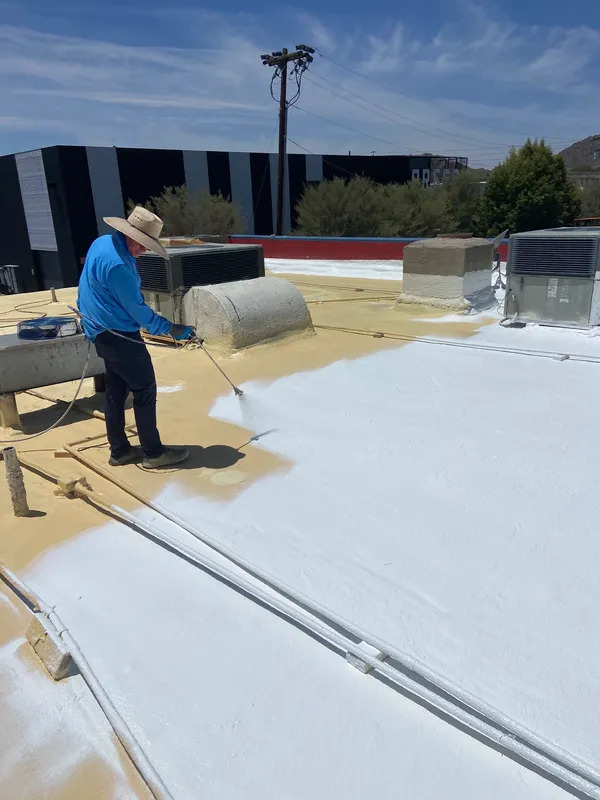
Scottsdale polyurea and elastomeric coating contractor
Polyurea is sprayed through heated, plural component equipment at a set ratio and temperature. Get either one wrong and the membrane cures badly in seconds, with no chance to smooth it out. Our crew sets up, tests and sprays every polyurea job ourselves, and we tell you plainly when a cheaper coating would serve your roof just as well.
- Roofs we spray
Commercial and residential roofs that need a membrane tough enough for traffic, heat and movement.
Outside Scottsdale, we apply polyurea and elastomeric roof coatings in Phoenix, Paradise Valley, Fountain Hills, Cave Creek, Carefree, New River, Tempe, Mesa, Chandler, Gilbert, Glendale, Peoria and Sun City. Every town we cover is listed on our service areas page.
Background checked


Accredited by the Better Business Bureau, with Angie’s List Super Service Awards from 2013 and 2014.
- Polyurea questions
Polyurea roof coating questions, answered
What Scottsdale building owners ask most before choosing polyurea for a flat or metal roof.
Not sure it is worth it?
Tell us how the roof is used. If silicone or acrylic will do the job, we will say so before you spend more.
What is a polyurea roof coating?
A spray applied membrane made from two components that react the moment they meet. It sets in seconds into a tough, rubber like skin that covers the whole roof without seams, and it can take rain the same day it goes on.
Is polyurea better than silicone or acrylic?
It is tougher and faster, not automatically better. Polyurea wins on foot traffic, impact, movement and turnaround. Silicone handles ponding water better for less money, and acrylic is the low cost option for well drained roofs. We pick the one your roof needs.
Can polyurea go over my existing roof?
Usually. Foam, metal, concrete, modified bitumen and many older coatings can take polyurea with the right primer. The surface must be clean, dry and solid, so we test for moisture and adhesion before quoting.
How long does a polyurea roof coating last?
Circle G Roofing quotes over 20 years for these systems when they are maintained and recoated on time. The membrane itself is very durable; what decides its life is keeping drains clear, repairing damage quickly and renewing the UV topcoat when it wears.
Will a polyurea coating stop an active leak?
Once the leak source is repaired, yes. If water is getting in through rotten decking or soaked insulation, that has to be fixed first, because spraying over wet material traps it. We find and repair the entry point, then coat.
What does a polyurea roof coating cost?
More per square foot than silicone or acrylic, because of the material and the heated equipment. The final price depends on roof size, prep, detailing and thickness. We measure and photograph the roof and give you a fixed written price, free.
How fast does a polyurea roof coating cure?
It gels within seconds of leaving the gun and is usually dry enough to walk on within an hour or so. That is why it suits businesses that cannot close the roof, or jobs racing a monsoon forecast.
Does polyurea turn yellow in the sun?
Some types do. Aromatic polyurea is very tough but discolors under UV, so on a roof it is usually finished with a UV stable topcoat or swapped for an aliphatic polyurea. We specify the right finish for full Arizona sun.
What is the difference between elastomeric and polyurea?
Elastomeric is the family; polyurea is one member of it. Any coating that cures into a stretchy, rubber like membrane is elastomeric, including acrylic and silicone. Polyurea is the toughest and fastest curing of them, and the most expensive.
Is elastomeric roof coating worth it in Arizona?
On a sound flat or low slope roof, usually yes. It seals seams and fasteners, reflects the sun to cut heat gain and adds years to the roof for far less than a replacement. It is not worth it over a roof that is wet inside, which is why we check for moisture first.
How thick is a polyurea coating applied?
Roof polyurea systems are typically sprayed somewhere around 30 to 60 dry mils, thicker on traffic areas and around equipment. The exact thickness depends on the roof and the product, and it is written into your quote and checked as we spray.
Can polyurea go over an old silicone coating?
Not directly. Almost nothing bonds reliably to cured silicone, so the old silicone has to be removed first, or the roof stays silicone and gets a silicone recoat. We test the existing coating before recommending either.
Can you walk on a polyurea coated roof?
Yes, and that is one of its strengths. Polyurea is far more resistant to foot traffic and dropped tools than silicone or acrylic, which makes it a good fit for roofs with HVAC units and solar arrays that get serviced often.
Find out if polyurea is right for your roof
Call (602) 791-6415 or book a free assessment. You get photos, a straight recommendation and a written price for the coating your roof actually needs.