7349 N Paseo Del Sur, Suite 515, Scottsdale, AZ
Emergency leak line: 24 hours, 7 days
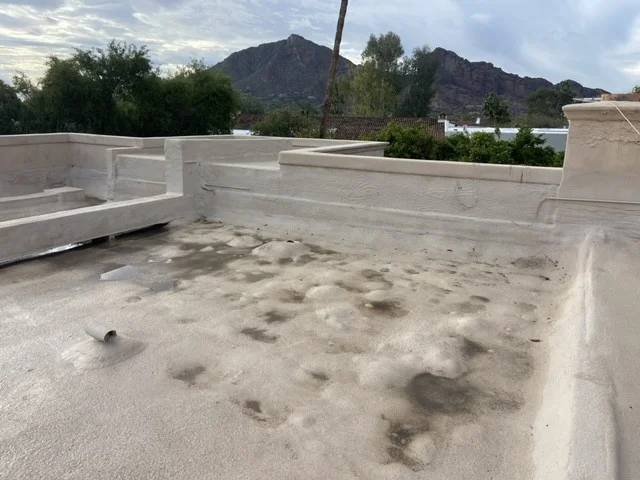
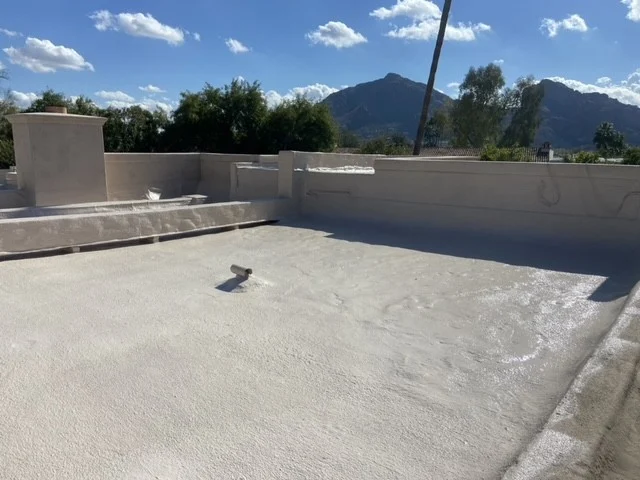
We check the surface first, then quote the right system in writing.

A roof coating is a liquid membrane applied in one continuous layer, so it seals the seams, laps and fasteners that let most flat roofs leak. It also reflects the sun, which keeps the deck cooler and slows the aging of everything underneath.
What it cannot do is rescue a roof that is wet inside. Saturated material has to be cut out and replaced first, or the coating just seals the water in. That is why we probe for moisture before quoting.
Coatings fail slowly and in plain sight. The left column means water is close to getting through. The right column is normal wear you can plan for.
Each of these is a step away from a leak.
Bring it up at a free inspection.
There is no single best roof coating for Arizona, only the right one for the roof you have. This is how the three systems we apply compare on a Scottsdale flat roof.
| Silicone | Polyurea | Acrylic elastomeric | |
|---|---|---|---|
| Best for | Flat roofs that hold water after storms | Roofs that flex, carry foot traffic or must be back in use fast | Roofs that drain well, when budget leads |
| Ponding water | Handles it well | Handles it well | Not suited to standing water |
| Typical lifespan | 10 to 15 years | 20+ years with maintenance | Shortest of the three |
| Relative cost | $$ | $$$ | $ |
| Recoat interval | Every 10 to 15 years, and only silicone bonds to it | Longest gap between recoats | Most frequent recoats |
| Foot traffic | Fair; slippery when wet | Best of the three | Fair |
Typical ranges for Valley roofs. Drainage, foot traffic and the condition of the roof underneath decide which one we recommend, and why, in the written quote.
In a Scottsdale summer a dark, worn roof surface can pass 150°F by mid afternoon, and that heat soaks down into the attic, the ducts and the rooms below. A bright white coating sends most of that sunlight back before it is absorbed.
The result is a cooler roof deck, an AC unit that runs less in July and August, and a roof surface that ages more slowly, because UV and heat cycling are what break roofing down in the desert.
Absorbs the sun all day and radiates heat into the building well after sunset.
Reflects most of the sunlight and runs far cooler to the touch on the same afternoon.
Less heat through the deck means less work for the AC and lower summer cooling bills.
Savings depend on the building, insulation and AC. Look for a coating rated by the Cool Roof Rating Council; we name the product in every quote.
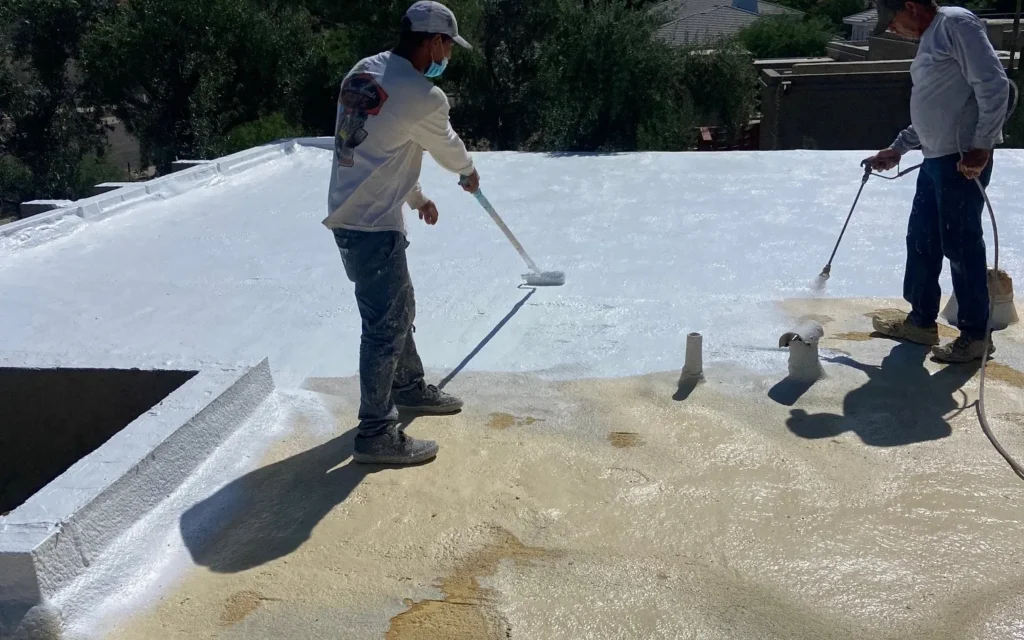
A spray foam roof lasts for decades because its coating is renewed, not because the foam is replaced. In Scottsdale that recoat is usually due every 10 to 15 years, and sooner on roofs with heavy foot traffic or ponding. The signs are easy to spot: chalk that rubs off on your hand, thin or bare patches where the yellow foam shows, and hairline cracking in the surface.
Recoating cost depends on the roof size, how much foam repair comes first, which coating goes on (silicone, acrylic or polyurea) and the thickness it needs. Caught on time it is a fraction of the price of rebuilding foam that has been left exposed, and we quote it in writing after a free inspection.
Most of a coating job is preparation you never see in a quote. Here is the order we do it in, so the coating bonds and stays bonded.
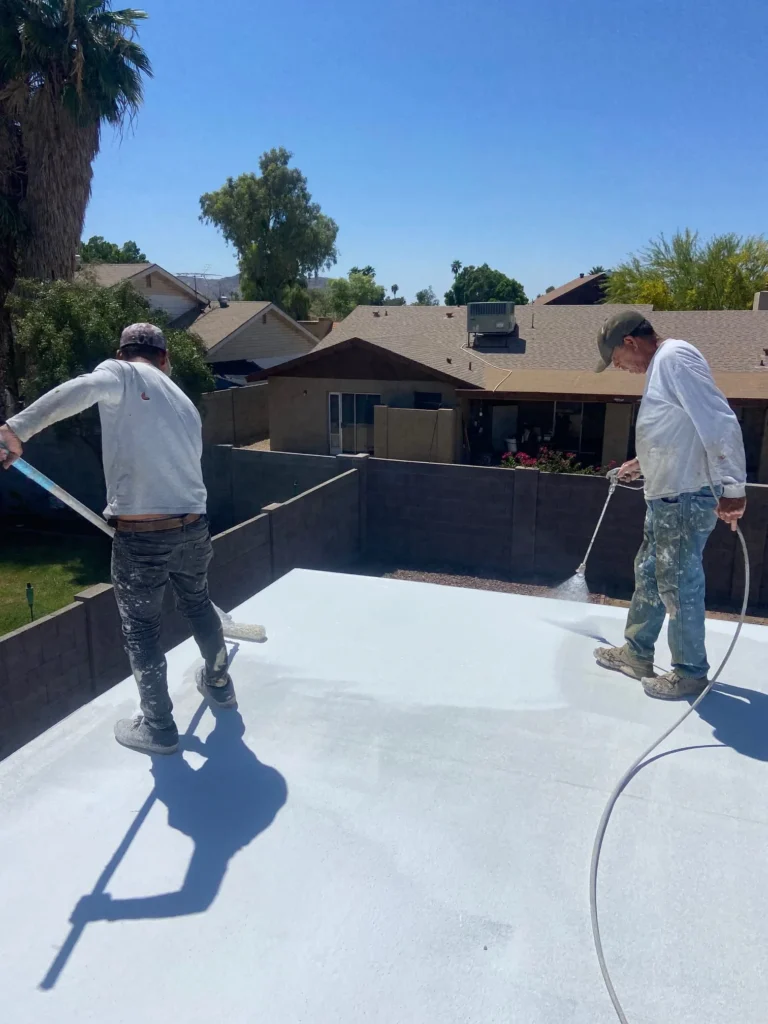
Years of dust and old chalk come off under pressure, then the roof dries out completely before anything goes on.
Anything soft, saturated or delaminated is removed and rebuilt with matching material so the coating has a sound base.
Seams, scuppers, parapet edges and every pipe, vent and curb get a reinforced detail coat first.
The system goes on as one continuous membrane at its specified thickness, measured as we go, then the warranty is issued.
Residential flat roofs, patio covers, metal shops and commercial buildings, coated by the same family run crew that inspects them.
Seamless, ponding tolerant protection for flat and low slope roofs.
High build, fast curing systems for roofs that move or carry traffic.
The scheduled recoat that keeps a spray foam roof working for decades, without a tear off.
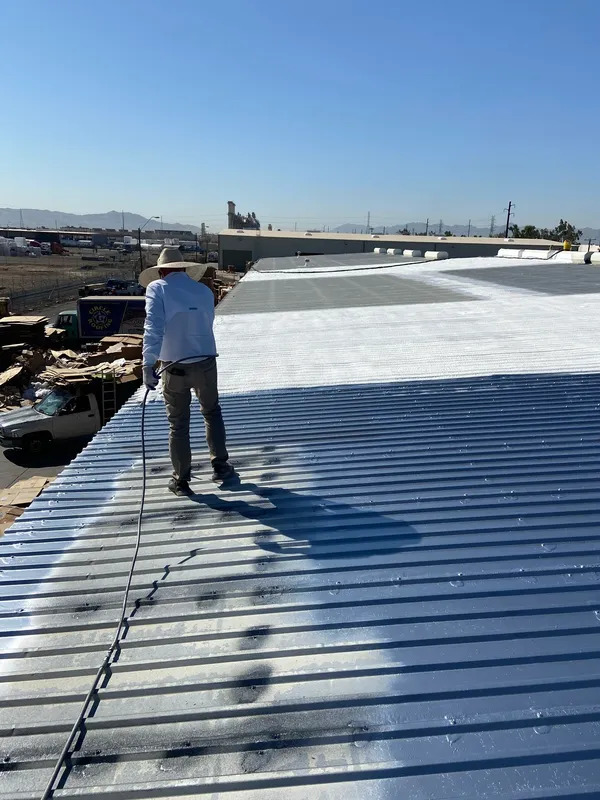
Seams and fasteners sealed, rust treated, and the panels given a reflective finish.
Small low slope roofs that leak at the house wall, sealed and coated.
Large roofs coated in sections around tenants, with photos at each stage.
A coated roof needs little attention, but timing matters. Inspect once a year and after big storms, recoat when the surface wears thin, and plan the work for the right season.
Mild days and dry air make spring a strong season to coat. It also gets the roof sealed before the summer heat and the monsoon.
Extreme roof temperatures and sudden storms make coating harder to schedule. Use this season to watch for ponding, stains and storm damage.
Our favorite window. The roof has cooled, monsoon damage can be fixed first, and the coating cures in steady, dry weather.
Fine for silicone and polyurea on dry days. Acrylics need warmth to cure, so cold nights and rain put them on hold.
Skipping these is how a coating lifts in its first summer. We do all five on the free inspection, and you get the photos.
A sound roof under a new coating keeps working for years, at a fraction of the cost and mess of a tear off.
The roof is cleaned, repaired where it needs it and sealed in one continuous membrane. The building stays in use, nothing goes to the landfill, and when the coating wears you recoat rather than replace.
The right call when the deck is rotten or the roof is wet through. It costs more, takes longer and leaves the building open while the work is done, so we only recommend it when a coating cannot do the job.
The coating and the work behind it are covered in writing long after the crew has left.
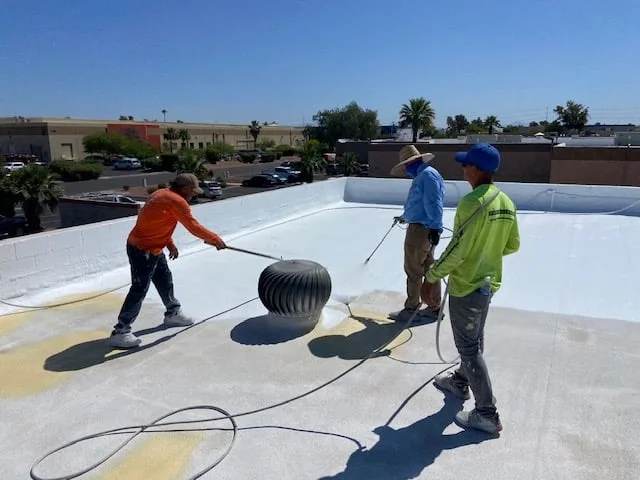
Coating work is won or lost in the preparation. A roof that gets a quick rinse and a fast coat looks fine for a season and then peels at the seams. We wash it, let it dry, cut out what is wet and seal every seam before the finish coat, and if a cheaper coating will do the same job on your roof, we tell you.
Homes and commercial buildings across Scottsdale, from a small patio cover to a warehouse roof.
Outside Scottsdale, we apply roof coatings in Phoenix, Paradise Valley, Fountain Hills, Cave Creek, Carefree, New River, Tempe, Mesa, Chandler, Gilbert, Glendale, Peoria and Sun City. Every town we cover is listed on our service areas page.


Accredited by the BBB, and winners of Angie’s List Super Service Awards in both 2013 and 2014.
What Scottsdale property owners ask most before putting a coating on a flat or metal roof.
Call and describe the roof. We can often tell you on the phone which system is likely, and confirm it on a free inspection.
The one that suits your roof. Silicone for flat roofs that pond, polyurea for roofs that flex or carry foot traffic, and acrylic elastomeric when budget leads and the roof drains well. Whatever goes on has to stand up to UV, because in Scottsdale the sun does more damage to a roof than the rain.
For most flat roofs, silicone. It handles ponding water and gives the most years for the money. Polyurea is worth the extra on roofs that move, take regular foot traffic or cannot be out of service for long, because it builds thick in one pass and cures in hours.
In most cases, yes. Foam, metal, modified bitumen, single ply, concrete and most older coatings can all be coated with the right primer. The surface has to be dry and well attached, which is why we probe for moisture and test adhesion first.
Ten to fifteen years is typical in the Valley, longer on a roof that drains well and is kept clean. When the surface turns chalky and thin it is time to recoat, and recoating then is much cheaper than repairing what gets wet once it fails.
If the leak comes through worn surface, seams or fasteners, yes. If the material under the surface is already wet, or a penetration was flashed badly, those get fixed first. A coating seals a sound roof; it does not repair a broken one. If water is coming in right now, call for emergency roof repair Scottsdale service first and coat later.
It depends on the roof size, the coating system, how much repair comes first and how many drains, seams and penetrations need detailing. We quote after measuring and photographing the roof, in writing, with the system and thickness named, and the inspection is free.
After the roof is washed, dried and repaired, the seams and penetrations get a reinforced base coat, then the elastomeric coating is sprayed or rolled on in one or two passes to the thickness the manufacturer specifies. On a flat roof that usually means a full day of prep before a single gallon of finish goes down.
Not on a roof that holds standing water, and not when rain or a cold night is due before it cures, because acrylics need dry weather to set. On low spots that pond after monsoon storms, silicone or polyurea is the better choice.
Coatings are made for flat and low slope roofs. A tile roof keeps water out with the underlayment beneath the tile, so a coating on top does not fix it; tile leaks are repaired or the underlayment is relaid. Shingle coatings exist, but on most Scottsdale homes a repair or a new roof is the better use of the money, and we will say so at the inspection.
Most homes take two to three days, and most of that is washing, drying, repairs and detail work before the finish coat. Larger commercial roofs are done in sections over a week or more. Dry weather is required, so storms can move the schedule.
Yes, once the coating has cured. Walk carefully and avoid dragging equipment across it. Silicone is slippery when wet, and polyurea stands up best to regular traffic around AC units, so we can add walk pads on routes that service crews use often.
We use manufacturer coating systems rated for Arizona heat and UV, and we choose the product to suit the roof rather than using one brand for everything. The exact product, its thickness and the warranty are named in your written quote, so you can look it up before you sign.
Call (602) 791-6415 or book a free inspection. We check the surface, test for moisture and send a written price naming the coating system, the thickness and the warranty.

