Standing Water on a Flat Roof Is a Drainage Problem, Not Bad Luck
Short answer: Ponding water on a flat roof is water that is still sitting on the roof after the rain has stopped and the rest of the surface has dried. In Arizona it almost always traces back to a blocked scupper or drain, a low spot where the deck has settled, or a roof that was never given enough slope to begin with. The fix is to clear or repair the drainage first, then correct the low area, often by building up slope with spray foam so water runs to the drain.
Flat roofs are everywhere in Scottsdale and Phoenix, on Santa Fe style homes, patio additions, and commercial buildings. “Flat” is a misnomer. A healthy low slope roof has a slight pitch so water moves toward a scupper or drain. When it stops moving, you get a pond, and a pond is the one thing a flat roof is not built to live with.
Here is why ponding happens here, what it does to the roof, and what a proper fix looks like. If you already know your roof is holding water, our foam roof repair page explains how we handle it.
What counts as ponding water
Every flat roof holds a little water for a while after a monsoon downpour. That is normal. The common rule of thumb in the roofing trade is that water still standing roughly 48 hours after the rain stops is ponding, and at that point you are looking at a drainage problem rather than weather.
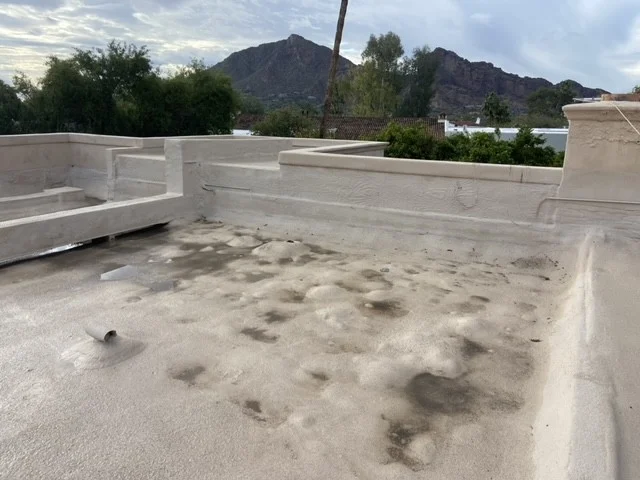
Arizona heat dries a roof fast, so water that is still there two mornings later in July is being held by the roof. Ponding also leaves evidence on a dry roof: a ring of dust and silt in a low area, a darker or stained patch of coating, a green tint in a shaded corner, or a spot that feels softer underfoot than the rest.
Why ponding happens on Phoenix and Scottsdale roofs
Clogged scuppers and drains
This is the most common cause by a wide margin, and the easiest to fix. A scupper is the opening through the parapet wall that lets water off the roof. An interior drain does the same job through the deck. Both are small openings, and Arizona gives them plenty to block them with: blown dust, palm fronds, mesquite and palo verde litter, and pigeon debris. Dust is the sneaky one. It builds up through the dry months, then the first big storm turns it into mud right at the drain opening.
Low spots from deck deflection
Roof decks sag a little over time, especially between supports and around heavy equipment. An air conditioning unit added years after the roof was built is a frequent culprit, as is a spot where the framing took on moisture from an old leak.
Not enough slope to begin with
Some older flat roofs in the Valley were built with very little pitch, and some patio covers and additions were tied in without much thought about where the water would go. Others had slope once and lost it under layers of repairs, with each new patch adding a small dam. A roof like this ponds in the same places after every storm no matter how clean the drains are.
Something new in the way
A thick patch, a pitch pan, a conduit run, or a solar mounting rail can sit across the path water used to take, and the water backs up behind it.
What standing water does to a flat roof
A pond is not just cosmetic. It works on the roof in several ways at once.
- It adds weight. Water is heavy, and a wide shallow pond loads the exact spot that was already sagging, which deepens the low area and invites more water next time.
- It speeds up sun damage. Standing water holds heat, and coatings under a pond break down faster than the dry roof around them. The low spot is usually the first place you see chalking, cracking, or bare foam.
- It finds every weak point. A seam or pinhole that would shed a passing rain will let water through if it sits under a pond for two days. Many flat roof leaks are really ponding problems that found a small defect.
Our post on flat roof repair in Arizona covers the other common failure points: seams, flashing, parapets, and coatings.
How ponding water on a flat roof gets fixed
The right fix depends on the cause, and a good contractor figures out the cause before quoting anything.
1. Check what the water already did
The area under the pond gets checked for moisture that has already worked into the foam or insulation. Coating over a wet substrate traps the water in, so saturated material gets cut out and replaced before any slope or coating goes on.
2. Clear and repair the drainage
Scuppers, drains, strainers, and downspouts get cleaned out and checked. A cracked scupper liner or a drain bowl that has separated from the deck gets repaired or replaced. On a lot of roofs this alone solves the problem, and a blocked scupper is the one thing worth looking for yourself from a ladder after a storm, without stepping onto the roof.
3. Build slope toward the drains
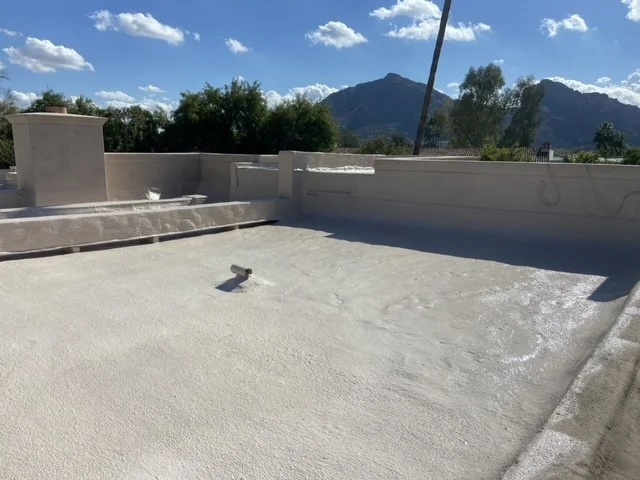
If the roof still ponds with clean drains, the low area needs to be raised so water runs off. This is where spray polyurethane foam earns its keep. Foam goes on as a liquid that expands and sets in place, so it can be sprayed thicker in the low spot and feathered out toward the drain to create a gentle, continuous slope. It bonds to the existing roof and is sealed under a protective coating. Our spray foam roofing page explains how the system goes together.
4. Add drainage where there is none
Sometimes water collects in a corner that has no way off the roof. Adding a scupper through the parapet, adding an overflow, or installing a cricket (a small raised ridge that steers water around an obstruction like an AC curb) gives it a path it did not have before.
5. Protect the surface
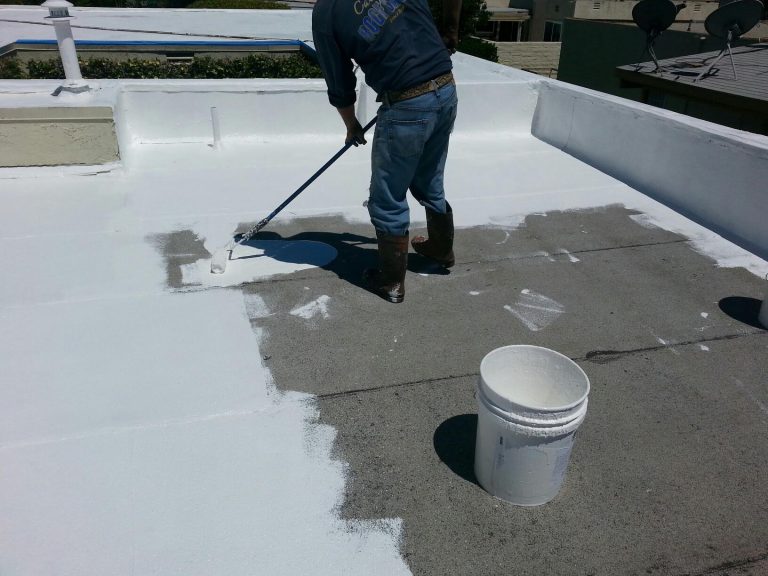
Once the water is moving, the area that was ponding usually needs its coating restored, because that spot has had the hardest life on the roof. A fresh elastomeric or silicone topcoat over sound foam protects the repair. Our roof coatings page covers the options.
“After we noticed a small hole in our main house foam roof and what appeared to be water pooling on our guest house foam roof, Circle G came by promptly and professionally and expertly addressed the issues.”
Get your flat roof drainage looked at
If your flat roof in Scottsdale, Phoenix, or anywhere in Maricopa County is holding water after it rains, Circle G Roofing can find out why and fix it properly. We are a family-run foam and coatings specialist, and foam roof makeovers carry a 5-year warranty.
Call Circle G Roofing at (602) 791-6415 or request an inspection online. We handle emergency leaks 24/7.
Frequently Asked Questions
How long can water sit on a flat roof before it is a problem?
Can I fix ponding water on my flat roof myself?
Does a foam roof pond water?
Will ponding water cause a leak?
Talk to Circle G Roofing
Family-run roofers serving Scottsdale, Paradise Valley, Cave Creek, Carefree and the Phoenix area.