Not Every Mark on a Foam Roof Is a Leak, but Some Are Telling You Something
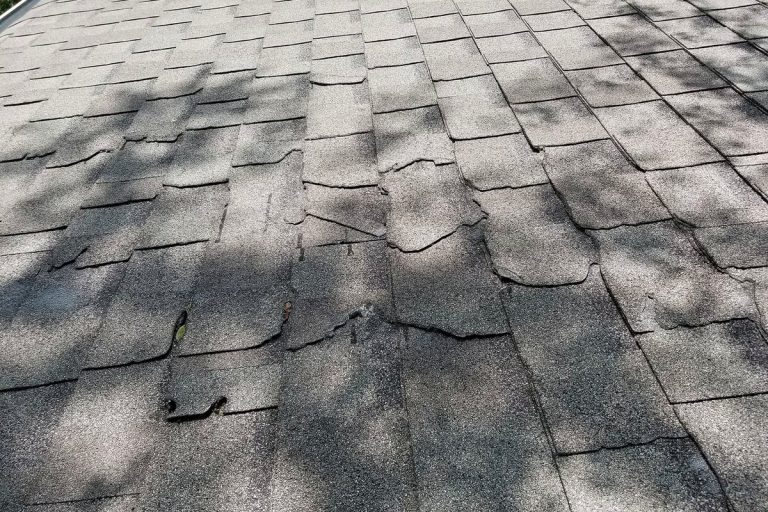
Short answer: Most spray foam roof problems fall into a few types: blisters, cracks, pinholes, bird pecks, chalking, peeling coating and soft spots. Some are cosmetic. Others mean water has already reached the foam. The ones to take seriously are anything that has broken through the coating, anything that feels soft or spongy underfoot, and anything near a leak. A small mark in the coating can be patched. Wet foam has to be cut out.
Here is how to read what you are seeing, which problems need action and what the repair usually involves. For the services we offer on foam and flat roofs, see our foam roof repair page.
How a foam roof is built, and why that matters for problems
A spray foam roof has two jobs split between two layers. The foam itself is the insulation and the waterproof body of the roof. The coating on top, usually an elastomeric or silicone product, protects the foam from the sun and from water. Our spray foam roofing Scottsdale page explains how the two layers go on. Foam does not hold up to long exposure to sunlight, so the coating is what lets it last in the Arizona sun.
That is why most of the problems you can see are really coating problems, and why the question to ask about any mark is whether it has gone through the coating and exposed or wet the foam.
How a spray foam roof is layered, and why depth matters
Two layers do two jobs. Most marks you can see are coating problems.
Illustration, not data and not to scale. Layer thicknesses vary by roof and by how many times it has been recoated.
Common foam roof problems, from cosmetic to urgent
Blisters
A blister is a raised bubble in the foam or in the coating over it. They usually come from moisture or gas trapped underneath, or from a spot where the coating did not bond properly to the foam. Small, firm, intact blisters are often not urgent, though they are worth watching. A blister that is soft, spongy, wet to the touch or that has split open is a different story, because the cracked coating lets water in. Blisters that keep returning in the same area point to moisture in the layers below.
Surface cracks
Hairline cracks in the coating are common on older roofs as the coating ages and the roof expands and contracts with the heat. They are a sign that the coating is wearing out, not always a leak. Cracks that are wide, that run into the foam, or that line up with a seam or a parapet are more serious, because water can follow them in. Left alone, small cracks grow.
Pinholes
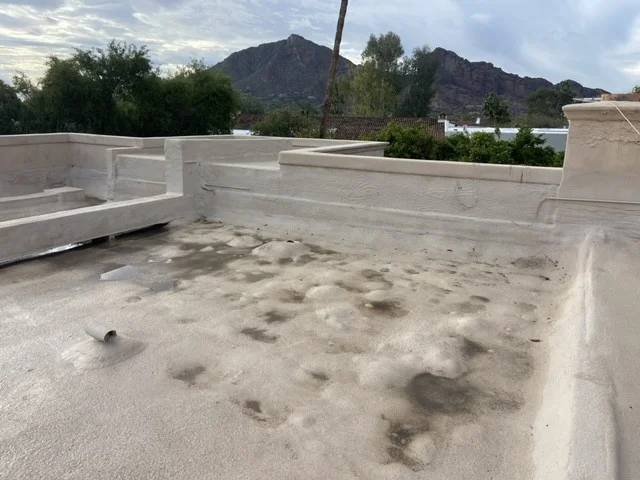
Pinholes are tiny openings in the surface of the foam or coating, sometimes left from the original application and sometimes from the coating aging. Individually they are small, but each is a path for water and a place the sun can reach the foam. A roof with a lot of pinholes and no recent coating is a roof that needs a recoat soon.
Bird pecks
Birds, woodpeckers among them, sometimes peck holes in foam, and the resulting divots break the coating and open the foam to water. Foam pecks are easy to overlook from the ground, and they tend to get worse as birds return to the same spot. Each peck should be patched and recoated, since the exposed foam will break down in the sun.
Chalking
If you rub your hand over the roof and come away with a white powder, the coating is chalking. That is the surface of the coating wearing away from sun exposure. Chalking on its own is not a leak, but it tells you the coating is thinning, and a thin coating is a short route to exposed foam.
Peeling or flaking coating
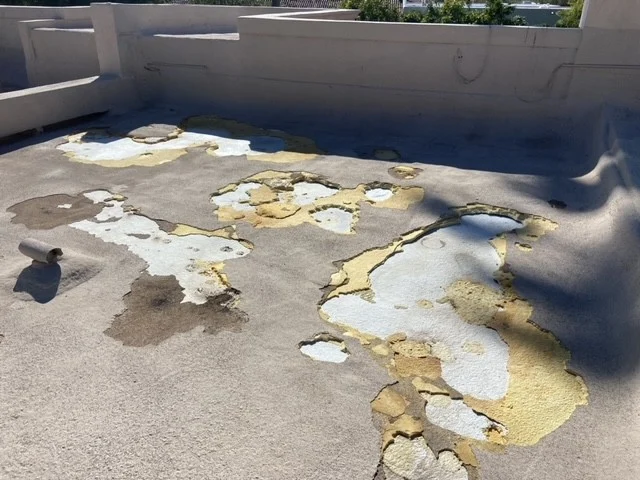
Coating that is lifting in patches usually means it did not bond properly, or that it has reached the end of its life. It exposes the foam underneath, so it should not be ignored. We cover the general warning signs in our post on signs you need a roof recoating in Phoenix and Scottsdale.
Soft spots
A spot that feels spongy underfoot, or that gives more than the rest of the roof, is the one to take most seriously. It suggests the foam underneath has absorbed water. Wet foam does not dry out on its own once it is sealed under coating, so a soft area usually needs to be cut out and replaced before the roof is recoated.
Which problems need repair and which can wait
A rough way to sort what you are seeing:
- Usually cosmetic or monitor: light chalking, small firm intact blisters, isolated hairline cracks in the coating.
- Fix soon, before the next storm season: peeling coating, many pinholes, bird pecks, wider cracks.
- Treat as urgent: soft or spongy areas, blisters that have split open, anything near a leak or a water stain inside the house.
Winter rain arrives from December through February in the Valley, so anything on the middle list is worth handling beforehand, while the roof is dry and the work is simple.
When Phoenix gets its rain: average inches by month
Winter rain is a real second wet stretch, and the one a patched or recoated roof needs to be ready for.
Average (normal) monthly rainfall for 1991 to 2020 at Phoenix Sky Harbor, in inches. The 12 monthly normals add up to 7.22 inches a year, and December through February add up to 2.48 inches. Averages, not a forecast: any single winter can be much wetter or drier. Source: NOAA National Centers for Environmental Information, U.S. Climate Normals 1991 to 2020, Phoenix Sky Harbor International Airport (station USW00023183).
How foam roof problems are repaired
The repair follows the problem, and a good contractor will decide on the repair after checking how far the problem goes.
1 | Find the extent of the damageThe roof is checked for moisture and soft areas so the repair covers the whole problem and not just the part that is visible. |
2 | Clean and prepare the surfaceDirt, chalk and loose coating are removed so the repair bonds. |
3 | Cut out and replace any wet foamFoam that has taken on water is removed and new foam is sprayed in so the roof is solid again. |
4 | Patch cracks, pinholes and pecksSmall openings are sealed so water cannot reach the foam. |
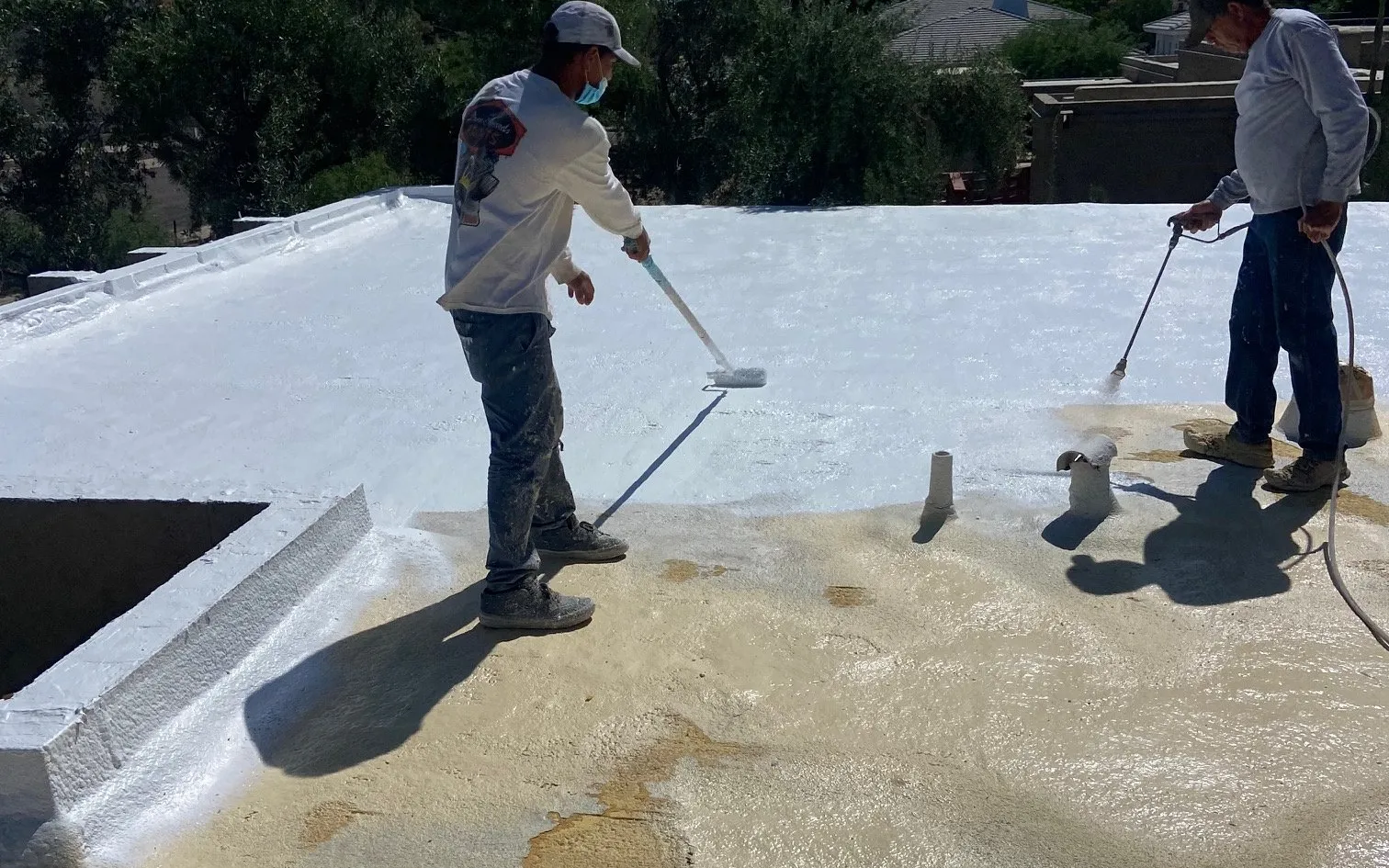
5 | Recoat to protect the repairA fresh elastomeric or silicone coating over the sound foam protects it from the sun, and extends the life of the roof. |
“Circle G came by promptly after we noticed small holes in our main house foam roof, as well as what appeared to be water pooling on the roof of our guest house. They fixed the main house roof and cleaned and added elastomeric coats to the guest house roof to prevent further pooling of water.”
Water that stays on the roof can make every one of these problems worse. If you see it, our post on flat roof repair in Arizona covers what else tends to fail on a low slope roof. Coatings are explained on our roof coatings page.
Get your foam roof checked before the rain
If you are seeing blisters, cracks, pecks or soft spots on your foam roof in Scottsdale, Phoenix or anywhere in Maricopa County, Circle G Roofing can inspect it and tell you which ones matter. Request an inspection or call us, and see our foam roof repair page for more.
Frequently Asked Questions
Are blisters on a foam roof a problem?
Why is my spray foam roof cracking?
Do bird pecks on a foam roof need repair?
How do I know if my foam roof is leaking?
What does chalking on a foam roof mean?
Talk to Circle G Roofing
Family-run roofers serving Scottsdale, Paradise Valley, Cave Creek, Carefree and the Phoenix area.