You Can Walk on a Tile Roof, but a Cracked Tile Is Easy to Miss
Short answer: You can walk on a tile roof if you have to, but tile is brittle and it cracks easily when it is stepped on in the wrong place. A cracked or slipped tile often shows no sign from the ground and turns into a leak when winter rain arrives. If you can do the job from a ladder, from the ground or from inside the attic, do that instead. Foam roofs handle foot traffic better than tile, though they have limits too.
November is when this comes up, because it is when people in the Valley climb onto roofs to hang holiday lights, adjust a satellite dish or let a technician service a rooftop unit. Here is where tile bears weight, what to avoid and what to do if you already heard a crack.
Why tile cracks when it is walked on
Concrete and clay tile are strong in compression and weak in bending. A tile that is supported underneath carries weight well. A tile that is stepped on in the middle of its span, where there is air or a gap under it, can snap like a cracker. The tile is also curved, so a foot placed in the wrong spot can concentrate the whole load on a small area.
Age matters too. Tile that has baked in the Arizona sun for 15 or 20 years is more brittle than a new one, and tile that has already had a hairline crack is a weak point waiting for the next step.
Where tile can carry weight and where it cannot
There is no universal safe spot, because tile profiles and installation methods differ. What roofers generally watch for is whether the tile is supported by the tile below it and by the roof structure under it.
- Better: places where one tile overlaps the next and the area is well supported, and the lower part of the tile near where it rests on the course beneath it.
- Worse: the middle of a tile’s exposed span, tiles near the eave edge, tiles around penetrations, and any tile that already rocks or sounds loose.
- Worst: ridge and hip caps, valleys, and tiles that are wet, dusty or covered in debris, since your foot can slide.
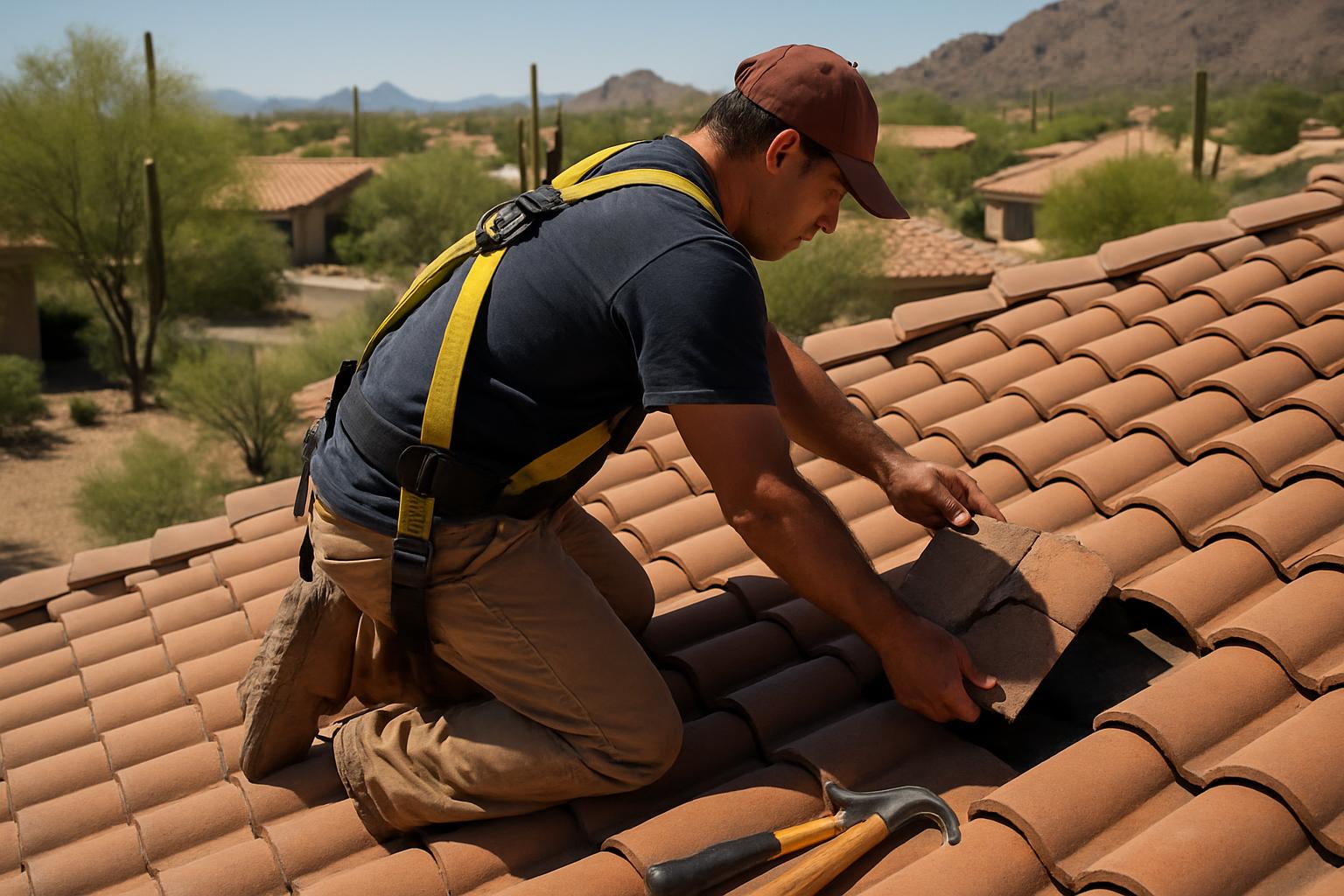
- Technique: take small, deliberate steps with soft-soled shoes and keep your weight low and even. Do not stomp, drag your feet or set down tools and ladder feet on loose tile.
That is a general rule of thumb, not a guarantee. A roofer who works on tile every week still carries and tests each step, and they wear a harness for a reason.
Where to put your feet on a tile roof, and where not to
Ranked from better to worst. Color is paired with a label so it reads without color.
- Where one tile overlaps the next and the area is well supported
- The lower part of the tile, near where it rests on the course beneath
- The middle of a tile’s exposed span
- Tiles near the eave edge and around penetrations
- Any tile that already rocks or sounds loose
- Ridge and hip caps and valleys
- Tiles that are wet, dusty or covered in debris, where a foot can slide
A general rule of thumb, not statistics and not a guarantee. Tile profiles and installation methods differ, so there is no universal safe spot. Where you can, work from a ladder, the ground or the attic instead.

Holiday lights and rooftop units: the two big causes in November
Two jobs account for a lot of foot traffic on Valley roofs this time of year.
Hanging holiday lights
Most light displays only need the eave line, and that can be reached from a ladder without stepping on the field of the roof. If you hire a light installer, ask how they reach the roof and whether they will avoid walking on the tile. Lights stapled or nailed into tile or fascia can also create small holes and cracks, so use clips made for the roofline and not anything that pierces the roof.
Servicing air conditioners, swamp coolers and satellite dishes
Rooftop units sit in the middle of the roof, which means technicians have to cross the tile to reach them. It is worth asking a technician to take a specific path and to report any tile that cracked. Newer installations often include a walkway or stepping surface, which is a good thing to ask about whenever equipment goes on a roof.
What about walking on a foam roof?
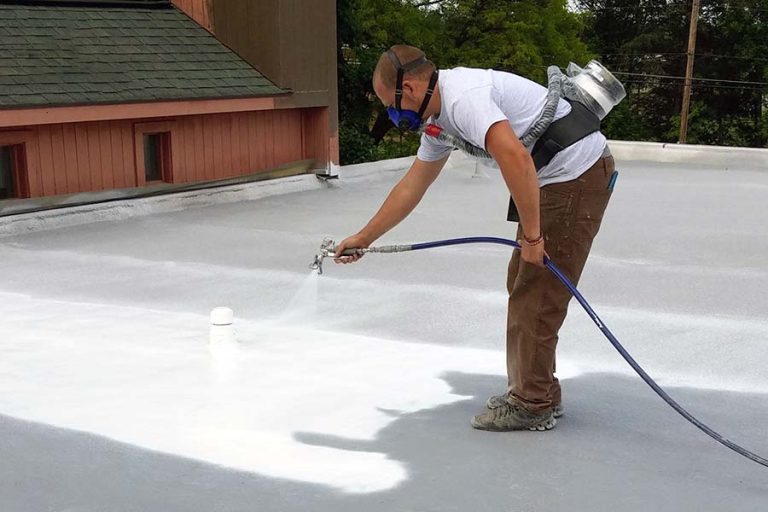
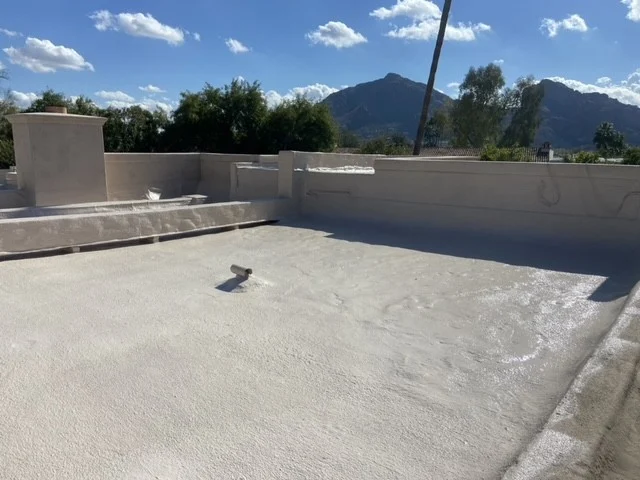
A spray foam roof is a different surface. It is a continuous layer without individual pieces to crack, so it generally handles foot traffic better than tile, and it is common for technicians to walk on them to service equipment. That said, it is not indestructible.
- Sharp objects, dragged tools and ladder feet can puncture or gouge the coating and expose the foam underneath
- Repeated foot traffic along the same path wears the coating faster, which is why heavily used routes to equipment sometimes get a protective walk pad
- Walking on wet or oily surfaces is slippery and risky
- Any gouge or cut should be repaired promptly, because the foam under the coating is not meant to stay exposed to sun and water
If you own a foam roof and are not sure how it is holding up, our foam roof repair page explains what we look for. We also compare the two surfaces in our post on foam roofing vs tile roofing in Arizona.
What to do if you heard or felt a tile crack
If you hear a crack, or a tile moves under your foot, stop and take note of where it happened before you do anything else.
1 | Stay calm and get off the roof safelyDo not keep moving around to look for damage. A fall is a bigger problem than a cracked tile. |
2 | Note and photograph the area from the groundUse your phone, and zoom in if you can, to record roughly where you were. A photo is useful if you later need a roofer to find the spot. |
3 | Check the attic after the next rainLook for damp spots, stains or drips in the area under where the crack happened. A new stain in the ceiling is a sign that water is getting in. |
4 | Have a roofer take a lookA cracked tile can be replaced on its own, and catching it early is far cheaper in effort and disruption than repairing the water damage it can cause. |
“I had a new AC unit installed after the initial roof work was done, and that area had a small leak. Jimmy and team honored their guarantee and came over quickly to fix the leak, even though it was not their work that caused the issue.”
Skip the climb and get a roof inspection instead
If you are not sure whether your roof is safe to walk on, or you think a tile may already be cracked, Circle G Roofing can inspect it and tell you what we find. That is safer than climbing up yourself, and it works across tile, foam and flat roofs in Scottsdale, Phoenix and the surrounding area. See our roof repair page for the services we offer.
Frequently Asked Questions
Can you walk on a tile roof?
Where is it safest to step on a tile roof?
Can you walk on a foam roof?
How do I know if I cracked a tile?
Is it safe to hang holiday lights on a tile roof?
Talk to Circle G Roofing
Family-run roofers serving Scottsdale, Paradise Valley, Cave Creek, Carefree and the Phoenix area.