Pigeons Under Your Tile Roof Are Using a Gap the Roof Left Open
Short answer: Pigeons nest under S-tile and barrel-tile roofs because the open gaps along the eave give them a shaded, protected hiding place. Their droppings, nesting material and weight can clog valleys, shift tiles and hold moisture against the underlayment. On the roofing side, the permanent fix is bird stop (also called eave closure), which seals the gaps, along with cleaning out the debris and resetting any tiles that moved. Removing the birds themselves is pest control work, not roofing.
If you can hear cooing on your roof at dawn, or you keep finding droppings below the eave, this post explains what is going on up there and what a proper fix involves. Our tile roof repair page covers how we approach the repair side.
Why pigeons nest under tile roofs in the Phoenix area
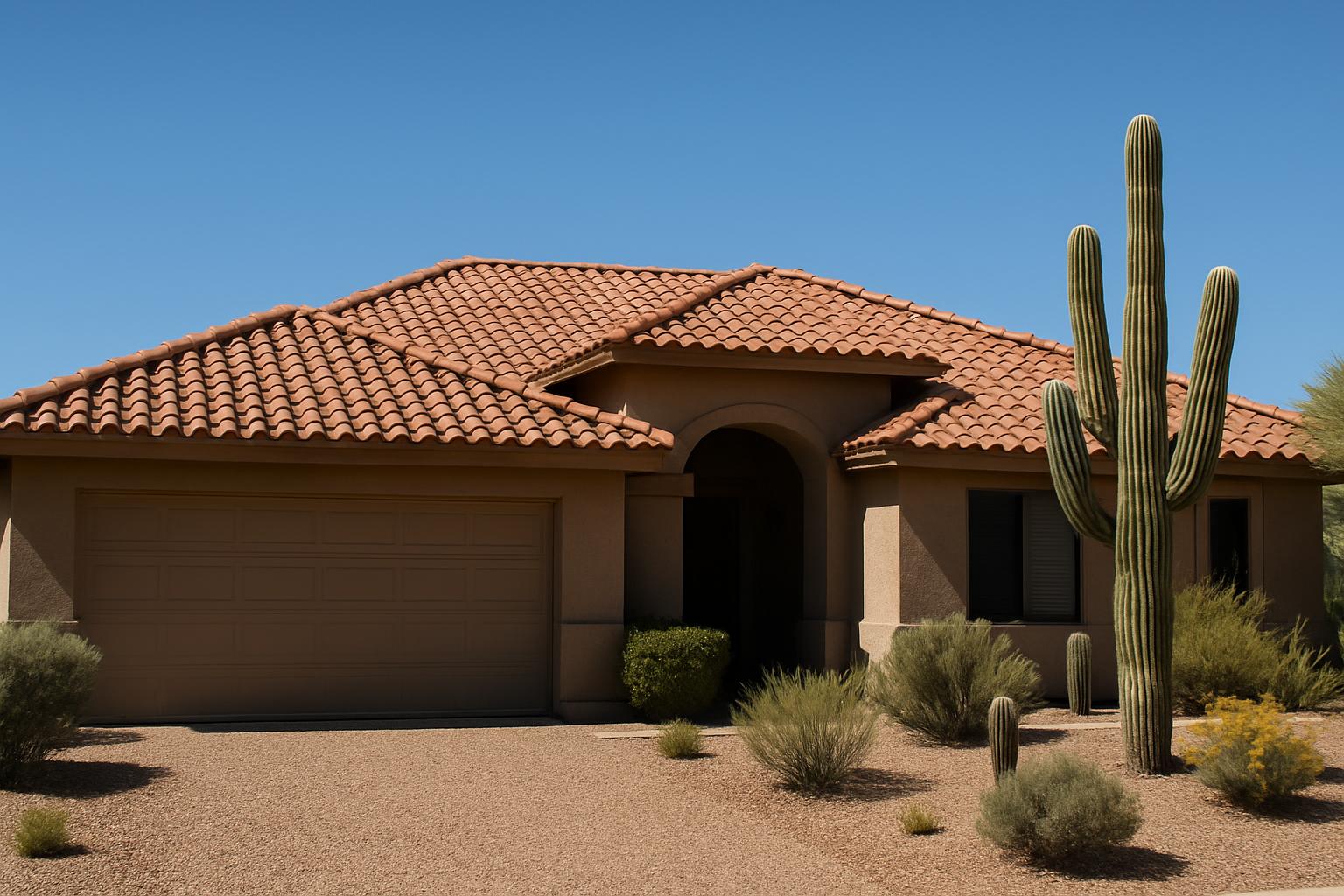
Look at the lower edge of an S-tile or barrel-tile roof and you will see the problem. The tiles are curved, so where they meet the eave there is a row of small open channels between the tile and the roof deck. From a pigeon’s point of view, that is a row of ready-made nesting boxes: shaded, out of the wind, and safe from most predators.
The Valley adds to the pull. Summer heat makes any shaded spot valuable, and pigeons will return to the same sheltered spot year after year. A single pair can turn into a small flock under one roof, and nests tend to stay put once they are built. That is why homeowners often notice the problem in the cooler months, when they are outside more and the droppings below the eave are harder to ignore.
Signs the birds are already living under your tiles
- Cooing, scratching or flapping from the roof, usually at dawn and dusk
- Droppings staining the fascia, the wall below the eave, a patio or a car parked nearby
- Straw, twigs or feathers sticking out from under the lowest row of tiles
- Birds repeatedly flying in and out of the same spot along the roof edge
- A sour smell or insects drawn to the area, which can mean an old nest

The damage pigeons can do to a tile roof
A few birds are mostly a nuisance. A nesting colony that stays for years is a roof problem, and these are the issues we would want a homeowner to know about.
- Blocked valleys and drainage paths. Nesting material and debris pile up where water is supposed to run off. When the next storm arrives, the water has to go somewhere, and sometimes that is under the tile.
- Moisture held against the underlayment. A nest is a wet, packed mat. Sitting on the underlayment, it can keep that area damp long after the rain has stopped, and underlayment that stays wet breaks down faster.
- Displaced and cracked tiles. Birds and the debris they leave can push tiles out of position at the eave, and loose tiles are an easy way for wind-driven rain to get in.
- Droppings that damage finishes. Droppings are acidic enough to stain and etch paint, fascia and metal flashing, and they create a cleanup problem for anyone working on the roof.
- Health and cleanliness concerns. Dried droppings and nesting debris are not something to disturb without care. This is one more reason to leave the cleanup to people with the right protective gear.
Water that gets under the tile is rarely visible from the ground, which is why the tile itself is so often not the real problem. Our post on tile roof repair and underlayment explains why the layer under the tile matters so much.
What bird stop is and how it keeps birds out
Bird stop, sometimes called eave closure, is a shaped closure installed along the lower edge of a tile roof to fill the open gaps between the tile and the roof deck. Depending on the tile profile, it is made of metal or another durable material cut to match the curve of the tile, so birds can no longer get into the space. The roof still sheds water the same way, and the gap that invited the nesting is closed.
Why the eave gap invites pigeons, and what closes it
The lowest row of a tile roof, seen from the front.
Illustration, not data and not to scale. It shows the front of the lowest row of barrel tile. Tile profiles and bird stop shapes vary from roof to roof, so the closure is cut to match the tile on each home.
Why closing the gap works better than scaring birds off
Deterrents like spikes, fake owls or noise makers can move birds around for a while, but they leave the open gap in place. Pigeons are persistent and tend to go back to a site that has worked for them before. A sealed eave removes the reason they came in the first place, which is why the roofing side of the fix focuses on the gap and not the bird.
What a proper fix looks like, step by step
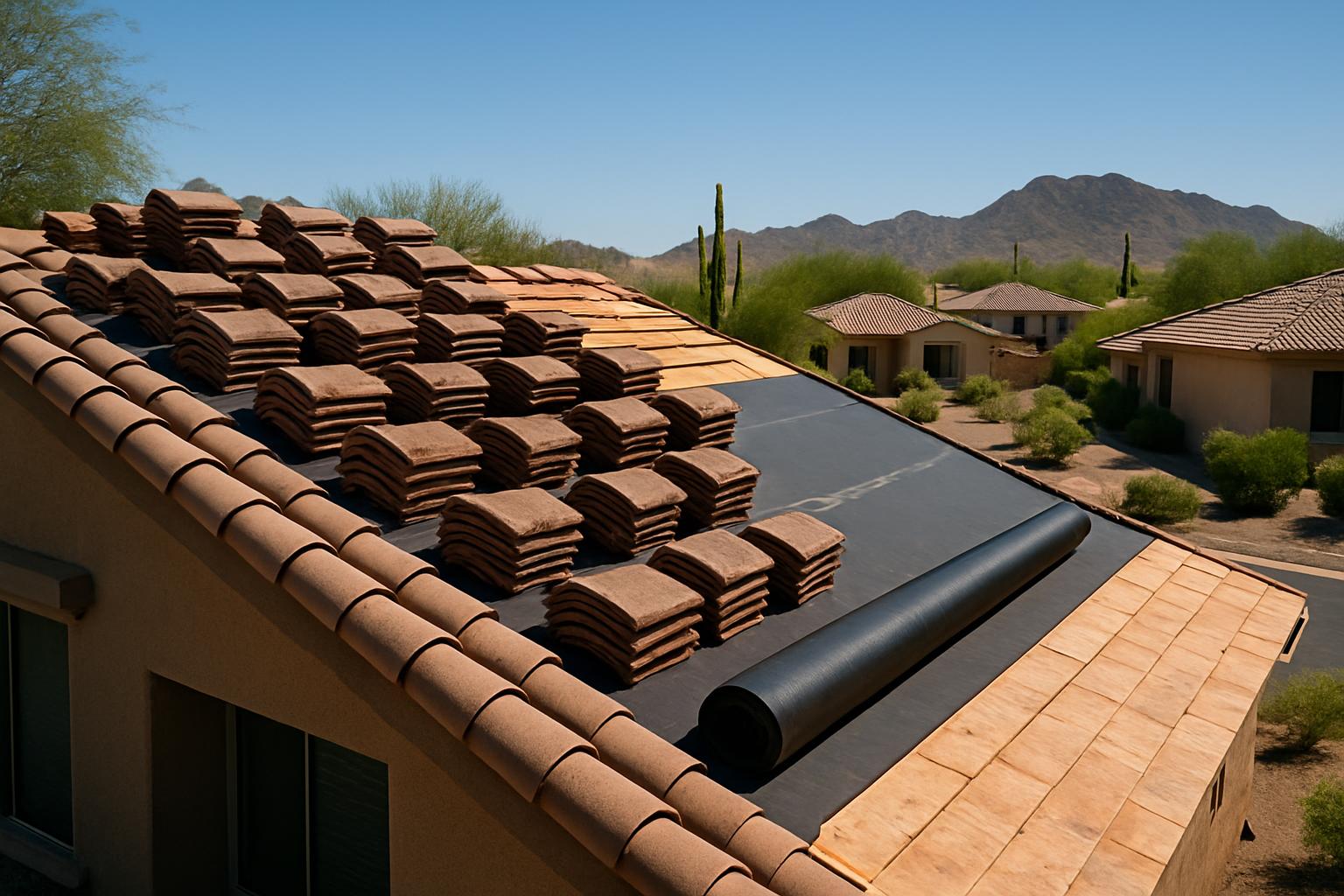
The details depend on the roof, and a good contractor will look before recommending anything. In general, the process runs in this order.
1 | Look at the eave and under the tileThe inspection covers the lowest rows of tile, the valleys and any spot where birds have been getting in, so the real extent of the problem is known before any work starts. |
2 | Clean out the nesting debrisOld nests and droppings come out, and the area gets cleaned so the roof can be checked properly. Sealing birds in with a nest still in place only creates a new problem. |
3 | Check the underlayment and the deckWet or soiled underlayment under a nest is a common finding. If it is damaged, it needs repair before anything gets closed up over it. |
4 | Reset or replace damaged tilesTiles that were pushed out of position or cracked at the eave get reset or replaced so the roof sheds water the way it should. |
5 | Install the bird stopWith the area clean and sound, the closure goes in along the eave line so the gap is sealed. |
“I needed repair done on the flat foam portion of my roof and some damaged tiles replaced.”
Can you deal with pigeons under your tile roof yourself?
Sweeping droppings off a patio is fine. Climbing onto a tile roof to pull nests out is a different matter. Tile is fragile and slippery underfoot, nests can carry dust you do not want to breathe, and a cracked tile from one wrong step can become a leak. For live birds, a licensed pest or wildlife professional is the right call. For the roof, the gap, the tiles and the underlayment, that is roofing work.
A sensible order is to have the birds removed by a pest professional, then have the roof cleaned, checked and closed up so they cannot come back.
Have your tile roof eaves looked at
If you are in Scottsdale, Paradise Valley, Cave Creek or anywhere in the Phoenix area and you suspect birds are living under your tile roof, Circle G Roofing can look at the eave line and tell you what we see. You can learn more on our tile roof repair page or on our general roof repair page.
Frequently Asked Questions
Why are pigeons nesting under my tile roof?
What is bird stop on a tile roof?
Can pigeons damage a tile roof?
Does a roofer remove the pigeons?
Should I climb on my tile roof to clear the nests?
Talk to Circle G Roofing
Family-run roofers serving Scottsdale, Paradise Valley, Cave Creek, Carefree and the Phoenix area.