7349 N Paseo Del Sur, Suite 515, Scottsdale, AZ
Emergency leak line: 24 hours, 7 days
We find the damage, photograph it and quote the fix.
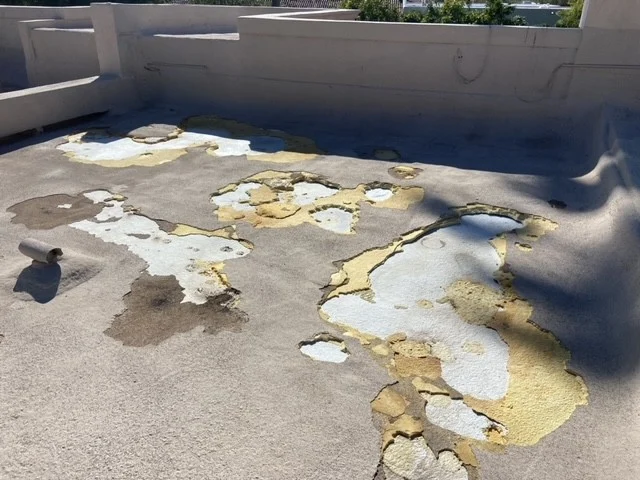
Most foam roof damage is local. A patch of blisters over a wet spot, a line of bird pecks along a parapet, a low area that holds water after storms, or a crack where a vent was flashed badly. Fixed early, each one is a small, inexpensive repair.
Left alone, water gets into the open foam, spreads sideways and turns a patch into a section. That is why we probe the area around any damage before quoting, so the repair covers everything that is wet, not only what shows.
Foam roofs give plenty of warning. The left column means water is reaching the foam or is about to. The right column can usually wait for a scheduled visit.
Each of these lets water into the foam.
Note it and mention it at an inspection.
A foam repair only lasts if it is bonded into sound, dry foam and sealed under the same coating as the rest of the roof. These are the steps.

We press and probe around the visible damage to find where the foam is wet or delaminated, and mark the full repair area.
Wet, blistered or broken foam is cut out cleanly until only dry, well bonded foam remains.
New foam is sprayed into the cutout and shaped so water runs off toward the drains instead of pooling.
Base and top coats seal the repair and overlap the surrounding coating, so the patch is protected from UV.
Residential and commercial foam roofs, repaired by the crew that has sprayed foam in the Valley for nearly two decades.
Blisters opened, wet foam removed, refilled and recoated.
Pecked areas along parapets and edges patched, with tips to discourage repeat visits.
Low spots built up with new foam so water drains properly.
Vents, skylights, AC stands and solar mounts resealed into the foam.
When repairs no longer make sense, a new foam roof over the old one.
Most of the foam repairs we do started as something minor. These habits keep them that way.
Most foam roofs we see need a repair, sometimes followed by a recoat. Full replacement is rare.
Blisters, pecks, ponding and failed flashings are cut out and rebuilt, then coated. This is the right call when the rest of the coating still has life in it.
If the coating is worn everywhere, repairs are followed by a full recoat. Replacement is only needed when large areas of foam are saturated or the deck has failed.
You see the damage and the extent of the wet foam before you see a number.

Foam was the work Circle G was built on, and it is still what we are best known for. A good foam repair needs the right cut, dry substrate and a coating that bonds to what is already there, and a roofer who rarely touches foam tends to smear sealant over the problem. We cut it out and rebuild it properly.
Residential and commercial foam roofs anywhere in Scottsdale, from a single blister to a whole section.


Two Angie’s List Super Service Awards (2013, 2014) and a BBB accreditation you can look up yourself.
What Scottsdale homeowners and building owners ask most when a foam roof starts blistering, ponding or leaking.
Send a photo or describe what you see when you call. We will tell you whether it can wait or should be looked at now.
Usually moisture or air trapped under the coating or within the foam, often from a small leak, a damp surface when it was sprayed, or water getting in through damage nearby. Heat expands it into a raised bubble. Small dry blisters can wait; soft or spreading ones need cutting out.
Yes. Foam repairs well: the damaged area is cut back to sound foam, refilled with new foam, shaped to drain and coated to blend with the rest of the roof. Done properly, the patch lasts as long as the surrounding roof.
Keep the coating in good condition, since birds go after exposed or soft foam, and repair pecks quickly. Clearing standing water and debris on the roof helps too, because it attracts birds looking for insects.
Either a low spot formed when the foam was sprayed, settling of the deck, or blocked scuppers and drains. We clear the drains first, then build up low areas with new foam so water runs off.
It depends on how much foam is wet or damaged, how many penetrations need resealing and whether the coating around the repair needs renewing. We probe, photograph and give you a fixed written price, and the inspection is free.
If the damage is local and the rest of the coating is sound, repair. If the coating is chalky and thin across the whole roof, repair the damaged areas and then recoat everything. We will show you which with photos.
Foam is walkable, but walk gently, avoid dragging anything and keep to firm areas. If a spot feels soft or spongy underfoot, stay off it and have it checked, because that usually means wet foam below.
Most repairs are finished in a day, including the coating, as long as the weather is dry. Larger wet areas or ponding corrections can take two days.
Sudden damage such as hail or a fallen branch is often covered; blisters from age and wear generally are not. We date and photograph what we find so you can decide whether to claim.
Call (602) 791-6415 or book a free foam roof check. We find the damage, show you photos and send a fixed written price for the repair.

